



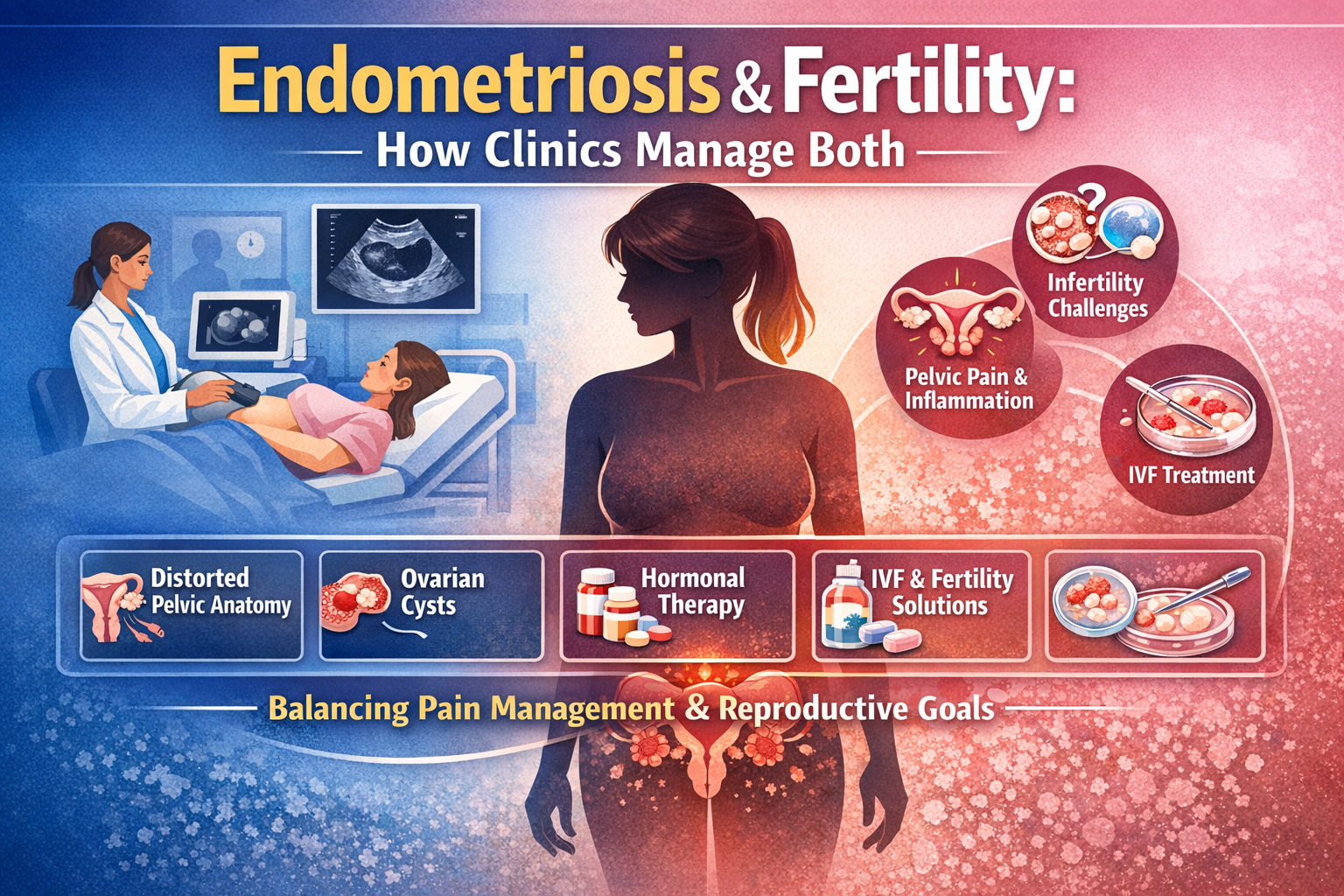
Endometriosis is one of the most complex conditions encountered in reproductive medicine. It is a chronic, estrogen-dependent disorder in which tissue similar to the uterine lining grows outside the uterus—commonly affecting the ovaries, fallopian tubes, pelvic lining, and sometimes even the bowel or bladder.
Beyond pelvic pain and menstrual discomfort, endometriosis is strongly associated with infertility. Studies suggest that 30–50% of women with endometriosis may experience difficulty conceiving.
Managing endometriosis and fertility simultaneously requires a carefully structured, evidence-based approach. At advanced centers like Reviva IVF, a leading Infertility Clinic Chandigarh, specialists focus on preserving reproductive potential while controlling disease progression. This article explains how fertility clinics balance symptom control with reproductive goals.
How Endometriosis Affects Fertility
Endometriosis impacts fertility through multiple mechanisms:
1. Distorted Pelvic Anatomy
Severe disease can cause:
- Adhesions (scar tissue)
- Blocked or damaged fallopian tubes
- Displacement of reproductive organs
This interferes with egg pickup and sperm transport.
2. Ovarian Function Impairment
Ovarian endometriomas (chocolate cysts) may:
- Reduce ovarian reserve
- Affect egg quality
- Complicate egg retrieval during IVF
3. Inflammatory Environment
Endometriosis increases pelvic inflammation, which can:
- Impair fertilization
- Affect embryo implantation
- Increase miscarriage risk
4. Altered Endometrial Receptivity
The uterine lining itself may be less receptive to embryo implantation in some patients.
Classification Matters
Endometriosis is staged from I (minimal) to IV (severe) based on surgical findings. However, severity of pain does not always correlate with fertility impact.
- Stage I–II (minimal to mild): Often subtle but can still impair conception.
- Stage III–IV (moderate to severe): Associated with adhesions, cysts, and anatomical distortion.
Treatment planning differs significantly based on stage and patient age — something experienced reproductive specialists at the Best IVF Centre carefully assess before initiating therapy.
Diagnostic Approach in Fertility Clinics
A fertility-focused evaluation typically includes:
- Detailed clinical history
- Transvaginal ultrasound
- AMH testing (ovarian reserve)
- Hysterosalpingography (to check tubes)
- Laparoscopy (in selected cases)
Modern clinics aim to avoid unnecessary surgery unless clearly indicated.
Treatment Strategies: Balancing Pain and Pregnancy
1. Medical Management (For Pain Control)
Hormonal therapies such as:
- Oral contraceptives
- Progestins
- GnRH agonists
These suppress endometriosis activity but also prevent ovulation—making them unsuitable when immediate pregnancy is desired.
Therefore, pain management and fertility planning must be coordinated carefully.
2. Surgical Management
Laparoscopic surgery may be considered when:
- Severe pain persists
- Large endometriomas are present
- Tubes are blocked
- Pelvic anatomy is significantly distorted
However, repeated ovarian surgery can reduce ovarian reserve. Clinics carefully weigh the benefits versus the potential impact on egg quantity.
3. Natural Conception
For younger women with minimal disease and good ovarian reserve:
- Timed intercourse may be attempted
- Ovulation induction with monitoring may be recommended
If pregnancy does not occur within 6–12 months, escalation to assisted techniques is considered.
4. IUI (Intrauterine Insemination)
In mild endometriosis cases:
- IUI combined with ovulation stimulation may improve chances
- Success rates decline in moderate to severe disease
Repeated failed IUIs are generally not recommended in advanced cases.
5. IVF (In Vitro Fertilization)
IVF is often the most effective treatment for moderate to severe endometriosis.
Benefits include:
- Bypasses tubal damage
- Reduces impact of pelvic inflammation
- Allows controlled fertilization
- Offers embryo freezing for future use
In advanced disease, IVF significantly improves pregnancy rates compared to natural attempts.
Special Considerations in IVF for Endometriosis Patients
Clinics often modify protocols by:
- Using tailored stimulation strategies
- Monitoring ovarian response closely
- Considering freeze-all cycles in select cases
- Optimizing endometrial preparation before transfer
If ovarian reserve is severely compromised, early intervention is critical.
Endometriosis & Egg Quality
Research suggests that while egg quantity may decline, egg quality is not universally affected in all patients. Age remains a stronger determinant of egg quality than endometriosis alone.
However, chronic inflammation may influence embryo development in some cases.
Psychological Impact
Endometriosis patients often experience:
- Chronic pain
- Delayed diagnosis
- Emotional exhaustion
- Fear of infertility
Integrated fertility care includes:
- Counseling
- Realistic timeline planning
- Emotional support
The dual burden of pain and infertility requires empathetic, multidisciplinary management.
When to Seek Fertility Consultation
Immediate fertility evaluation is advised if:
- Endometriosis is diagnosed
- Age is above 30
- Pain is severe
- Ovarian cysts are present
- Pregnancy has not occurred after 6–12 months
Early intervention prevents loss of valuable reproductive time.
Key Takeaways
- Endometriosis affects fertility through inflammation, anatomical distortion, and ovarian impact.
- Treatment must balance symptom control with reproductive goals.
- IVF is often the most effective option in moderate to severe disease.
- Surgery should be carefully evaluated to avoid compromising ovarian reserve.
- Early fertility planning improves outcomes significantly.


