


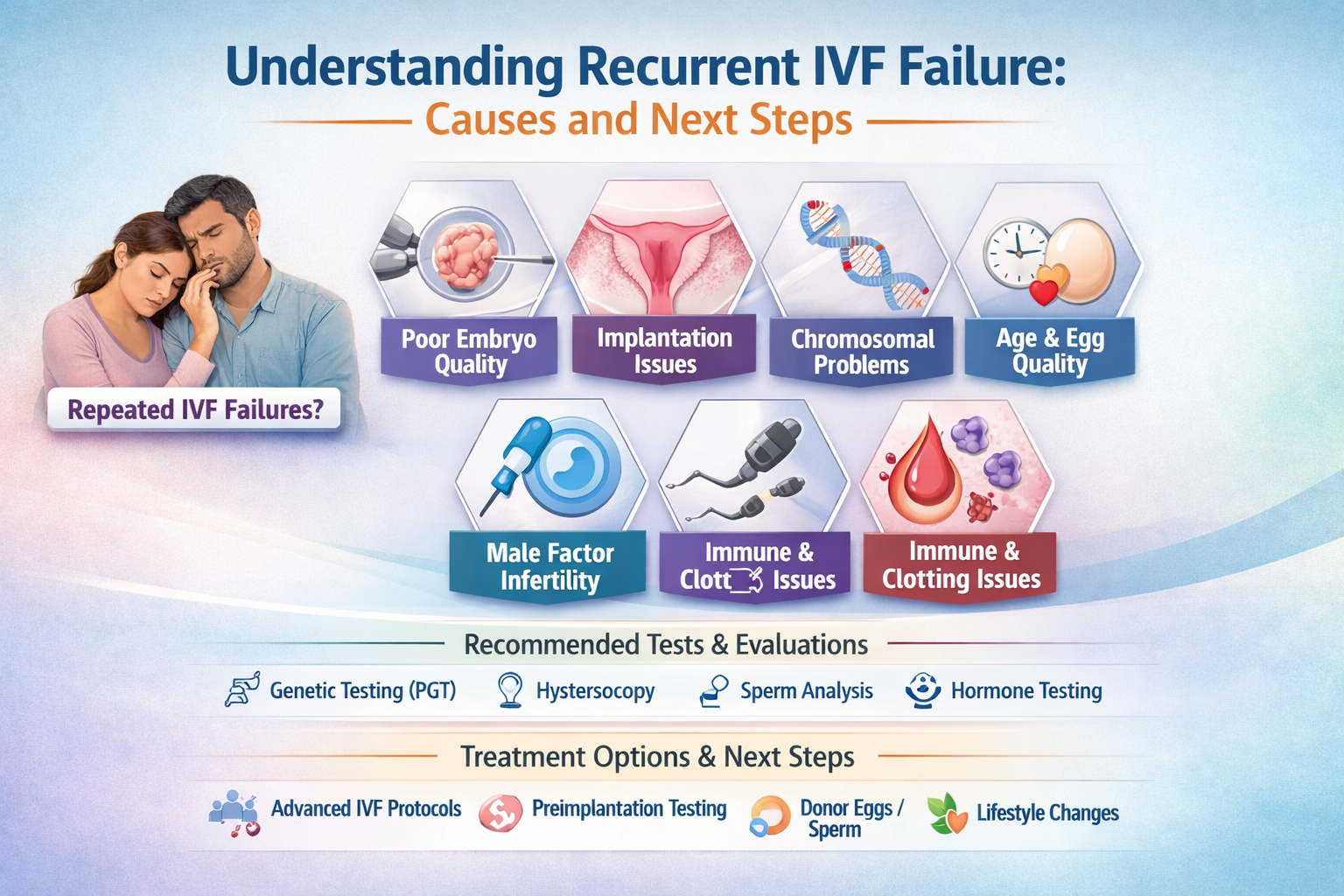
For many couples struggling with infertility, In Vitro Fertilization (IVF) offers hope for starting a family. However, when IVF cycles fail repeatedly, it can be emotionally and physically exhausting. This condition is known as recurrent IVF failure, and understanding its causes can help guide the next steps toward successful treatment.
What is Recurrent IVF Failure?
Recurrent IVF failure usually refers to multiple unsuccessful IVF cycles despite transferring good-quality embryos. While there is no universal definition, many fertility specialists consider it when pregnancy does not occur after two or three well-conducted IVF cycles.
Repeated failure does not necessarily mean pregnancy is impossible. In many cases, identifying the underlying cause and modifying the treatment plan can significantly improve success rates.
Common Causes of Recurrent IVF Failure
1. Poor Embryo Quality
Embryo quality is one of the most critical factors affecting IVF success. Genetic abnormalities in embryos may prevent proper implantation or lead to early miscarriage.
2. Implantation Issues
Sometimes embryos are healthy but fail to attach to the uterus. This can occur due to:
- Thin uterine lining
- Uterine abnormalities
- Hormonal imbalance
3. Chromosomal Abnormalities
Both partners may carry chromosomal variations that affect embryo development.
4. Age-Related Factors
Female age plays a significant role in fertility. Egg quality declines after the age of 35, increasing the risk of IVF failure.
5. Male Factor Infertility
Low sperm quality, poor motility, or DNA fragmentation can impact embryo development.
6. Immune or Blood Clotting Disorders
In some cases, immune system issues or clotting disorders may interfere with implantation.
Tests Recommended After Repeated IVF Failure
After repeated unsuccessful cycles, fertility specialists may recommend additional investigations such as:
- Genetic testing of embryos (PGT)
- Hysteroscopy to examine the uterus
- Hormonal evaluation
- Endometrial receptivity analysis
- Sperm DNA fragmentation testing
These tests help doctors understand the root cause and design a more personalized treatment plan.
Treatment Options and Next Steps
The good news is that many couples achieve pregnancy after adjusting the treatment strategy. Possible options include:
Improved IVF protocols: Adjusting medications or stimulation techniques.
Preimplantation Genetic Testing (PGT): Identifies genetically healthy embryos for transfer.
Lifestyle modifications: Weight management, stress reduction, and improved nutrition can enhance fertility outcomes.
Advanced sperm techniques: Methods like ICSI can improve fertilization in male infertility cases.
Donor eggs or sperm: In cases of severe egg or sperm issues, donor programs may be considered.
Emotional Support is Important
Repeated IVF failure can be emotionally overwhelming. Counseling, support groups, and guidance from fertility experts can help couples cope with the journey.
When to Consult a Fertility Specialist
If you have experienced multiple failed IVF cycles, it is important to consult an experienced fertility specialist at Reviva IVF. A detailed evaluation and personalised approach can significantly increase the chances of success in future treatments.
With the right medical guidance and treatment strategy, many couples eventually achieve their dream of parenthood.


