



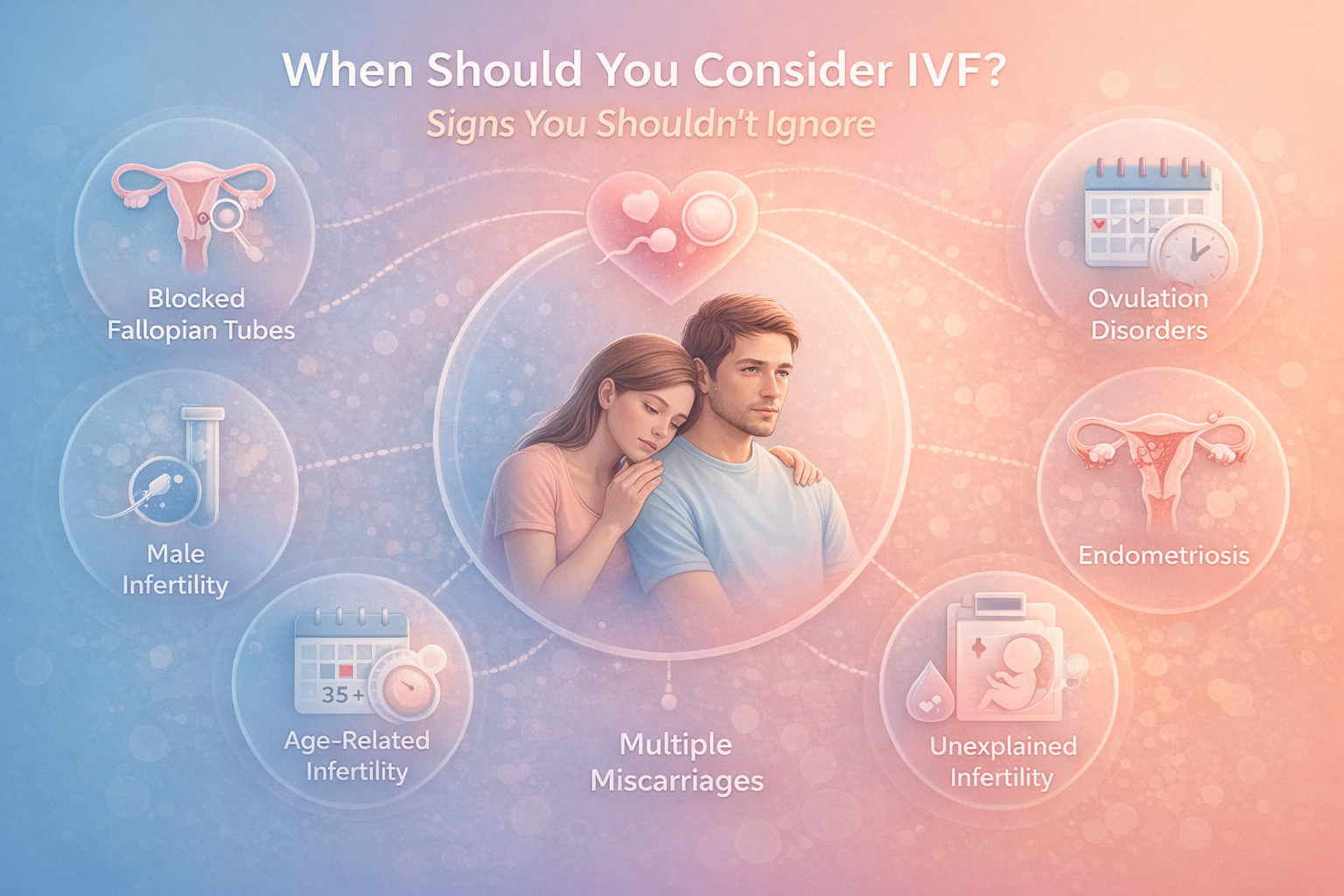
Deciding when to move toward IVF can be one of the most emotionally complex parts of a fertility journey. Many couples wait longer than necessary, hoping conception will happen naturally, while valuable time—especially age-related—passes by.
This blog explains when you should consider IVF, the key warning signs of infertility, and how early intervention can significantly improve outcomes—particularly for couples seeking IVF treatment in Chandigarh.
Understanding the Right Time for IVF
IVF is not always the first step in fertility care. However, it becomes a recommended option when natural conception or basic treatments such as ovulation induction or IUI have not resulted in pregnancy.
Knowing when to escalate to IVF is critical for both success rates and emotional wellbeing.
Signs You Should Consider IVF
1. Trying to Conceive for Over a Year (or 6 Months if Over 35)
- Under 35 years: No pregnancy after 12 months of regular, unprotected intercourse
- Over 35 years: No pregnancy after 6 months
Age directly affects egg quality and quantity. Delaying evaluation can reduce IVF success later.
2. Irregular or Absent Menstrual Cycles
Irregular cycles may indicate:
- Ovulation disorders
- PCOS
- Hormonal imbalance
If ovulation is inconsistent, natural conception becomes unpredictable, and IVF may offer better cycle control and outcomes.
3. Known Male Infertility Factors
IVF (often with ICSI) is commonly advised when semen analysis shows:
- Low sperm count
- Poor motility
- Abnormal morphology
Male-factor infertility contributes to nearly 40–50% of infertility cases, making early diagnosis essential.
4. Blocked or Damaged Fallopian Tubes
If the fallopian tubes are blocked or surgically removed due to:
- Previous infections
- Tuberculosis
- Ectopic pregnancy
IVF becomes the most effective treatment, as fertilisation occurs outside the body.
5. Endometriosis Affecting Fertility
Moderate to severe endometriosis can interfere with:
- Egg quality
- Embryo implantation
- Pelvic anatomy
IVF often bypasses these challenges and improves the chance of pregnancy.
6. Repeated Failure with Other Fertility Treatments
If multiple cycles of:
- Ovulation induction
- IUI
have not resulted in pregnancy, IVF may be the logical next step rather than repeating low-success treatments.
7. History of Recurrent Miscarriages
Two or more pregnancy losses may indicate:
- Genetic abnormalities
- Uterine or hormonal issues
IVF combined with advanced embryo assessment can help reduce miscarriage risk.
8. Fertility Preservation or Delayed Parenthood Plans
IVF is increasingly used by:
- Women planning pregnancy later in life
- Couples preserving fertility before medical treatments
This proactive approach helps secure future reproductive options.
Why Early IVF Consultation Matters
Early consultation does not mean immediate IVF—but it allows:
- Accurate diagnosis
- Personalised treatment planning
- Time-sensitive decisions
Clinics such as Reviva IVF focus on evaluating both partners comprehensively before recommending IVF, ensuring treatment is appropriate—not premature.
IVF Is a Medical Decision, Not a Last Resort
One of the biggest myths around IVF is that it should only be considered after “everything else fails.” In reality, timely IVF often:
- Reduces emotional exhaustion
- Avoids unnecessary treatment cycles
- Improves success rates
The goal is not to try longer—but to try smarter.
Final Thoughts
If you recognise one or more of these signs, it may be time to explore IVF with clarity rather than uncertainty. A well-timed decision can make a significant difference in outcomes—both medically and emotionally.
For couples considering IVF treatment in Chandigarh, an expert-led consultation is the most important first step toward informed and confident parenthood.


