

Hearing the words “low ovarian reserve” or “low AMH” can be overwhelming, especially if you’re planning to start or grow your family. Many women immediately assume that pregnancy is no longer possible or that IVF is their only option.
However, low ovarian reserve does not necessarily mean you cannot conceive. It simply means that the number of remaining eggs in the ovaries is lower than expected for your age. The right treatment depends on several factors, including your age, overall health, hormone levels, and reproductive history.
This guide explains what low ovarian reserve means, its causes, symptoms, diagnosis, and the fertility treatment options that may be available.
What Is Low Ovarian Reserve?
A woman is born with a finite number of eggs. Over time, both the quantity and quality of these eggs naturally decline.
Low ovarian reserve, also known as diminished ovarian reserve (DOR), refers to a reduced number of eggs remaining in the ovaries. It is different from infertility—many women with low ovarian reserve can still conceive naturally or with fertility treatment.
Ovarian reserve is commonly evaluated using:
- Anti-Müllerian Hormone (AMH) blood test
- Antral Follicle Count (AFC) via ultrasound
- Follicle Stimulating Hormone (FSH) blood test (in certain situations)
These tests help fertility specialists estimate ovarian reserve and plan appropriate treatment.
Does Low Ovarian Reserve Mean Poor Egg Quality?
Not always.
It’s important to distinguish between:
- Egg Quantity: The number of eggs remaining.
- Egg Quality: The likelihood that those eggs are chromosomally normal and capable of resulting in a healthy pregnancy.
A younger woman with low ovarian reserve may still have good-quality eggs, while egg quality naturally declines with advancing age, regardless of ovarian reserve.
What Causes Low Ovarian Reserve?
Several factors can contribute to reduced ovarian reserve.
Age
Age is the most common factor. Ovarian reserve gradually decreases over time, particularly after the age of 35.
Family History
Some women experience earlier ovarian aging due to genetic factors.
Previous Ovarian Surgery
Procedures for ovarian cysts or endometriosis may affect ovarian reserve in certain cases.
Endometriosis
Moderate to severe endometriosis can impact ovarian function and egg reserve.
Cancer Treatment
Chemotherapy and pelvic radiation can reduce ovarian reserve depending on the treatment type and dosage.
Autoimmune or Genetic Conditions
Certain medical conditions may contribute to premature ovarian insufficiency or reduced ovarian reserve.
Symptoms of Low Ovarian Reserve
Many women experience no noticeable symptoms.
Others may report:
- Difficulty conceiving
- Shorter menstrual cycles
- Irregular periods
- Reduced menstrual flow
- Fertility decline at a younger age than expected
Since symptoms are often absent, testing is the only reliable way to assess ovarian reserve.
How Is Low Ovarian Reserve Diagnosed?
Your fertility specialist may recommend:
AMH Test
Measures Anti-Müllerian Hormone, which provides an estimate of the remaining egg supply.
Antral Follicle Count (AFC)
An ultrasound evaluates the number of small follicles present in the ovaries at the beginning of the menstrual cycle.
Hormonal Assessment
Additional hormone tests may include:
- FSH
- LH
- Estradiol
- Thyroid function
- Prolactin
Together, these tests help guide treatment decisions.
Can You Get Pregnant Naturally with Low Ovarian Reserve?
Yes—in some cases.
Natural conception depends on several factors, including:
- Age
- Egg quality
- Ovulation
- Sperm quality
- Fallopian tube health
- Overall reproductive health
A diagnosis of low ovarian reserve does not automatically rule out natural pregnancy.
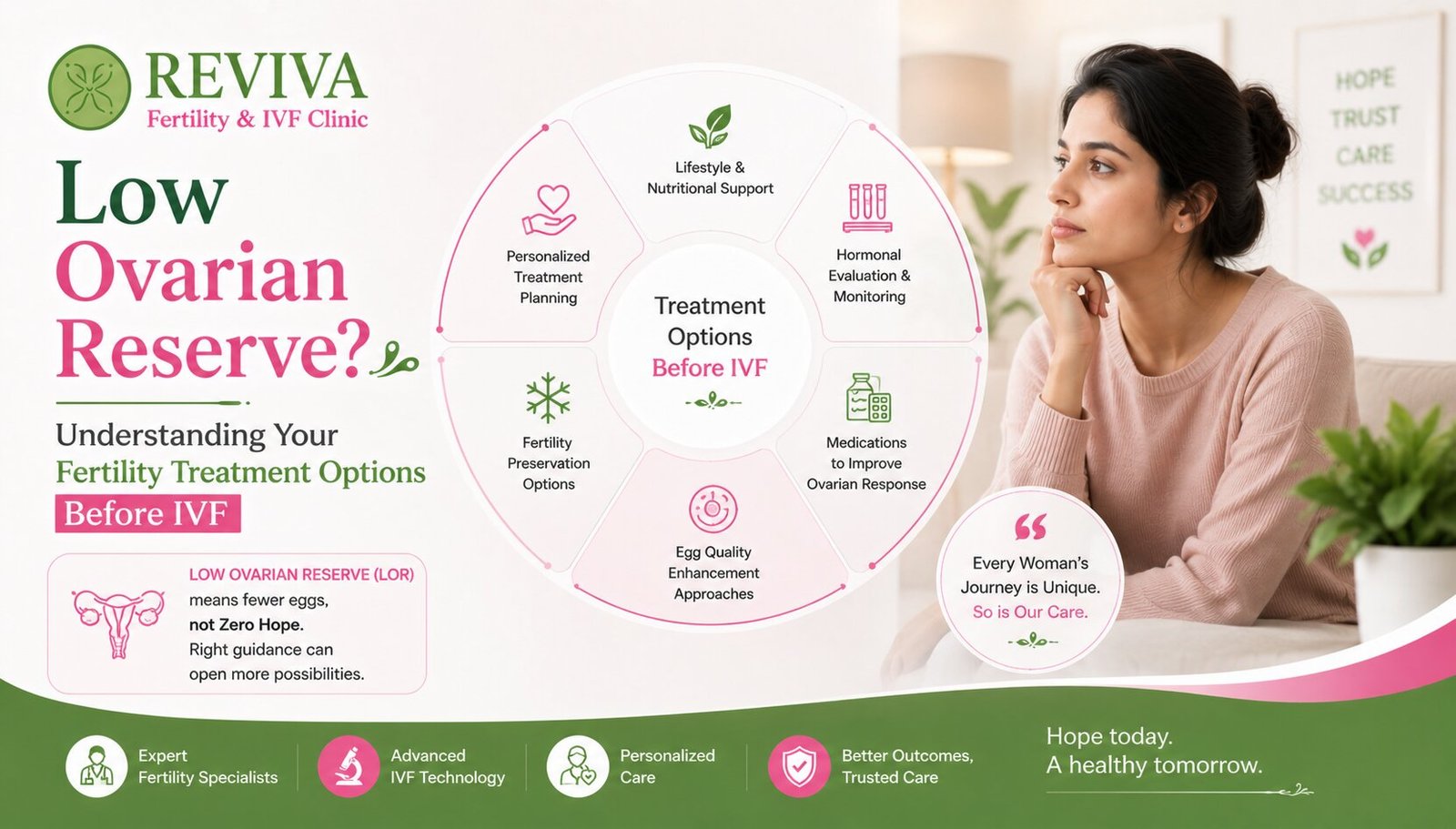
Treatment Options for Low Ovarian Reserve
Treatment is individualized based on the woman’s age, fertility goals, ovarian reserve, and any additional fertility factors.
1. Lifestyle Optimisation
Your doctor may recommend:
- Maintaining a healthy weight
- Eating a balanced diet
- Regular physical activity
- Avoiding smoking
- Limiting alcohol consumption
- Managing stress
While lifestyle changes cannot increase the number of eggs, they support overall reproductive health.
2. Ovulation Induction
For women who continue to ovulate, medications may be used to stimulate egg development when clinically appropriate.
3. Intrauterine Insemination (IUI)
IUI may be considered for selected patients depending on age, ovarian reserve, and the presence or absence of other fertility factors.
4. In Vitro Fertilization (IVF)
IVF is often recommended when:
- Age is an important consideration.
- Ovarian reserve is significantly reduced.
- Other fertility factors are also present.
- Previous treatments have not resulted in pregnancy.
IVF allows multiple eggs, if available, to be retrieved and fertilized in a laboratory, providing additional information about embryo development.
5. Egg Freezing
Women diagnosed with declining ovarian reserve who are not yet ready for pregnancy may wish to discuss fertility preservation options with their specialist.
6. Donor Egg IVF
In certain situations—particularly when ovarian reserve is severely diminished or repeated treatment cycles are unsuccessful—donor egg treatment may be discussed. The decision is highly personal and based on individual circumstances.
Factors That Influence Pregnancy Chances
Pregnancy outcomes depend on more than AMH alone.
Other important factors include:
- Woman’s age
- Egg quality
- Embryo quality
- Sperm health
- Uterine health
- Lifestyle factors
- Overall medical condition
This is why fertility specialists evaluate the complete clinical picture rather than relying on a single test result.
When Should You See a Fertility Specialist?
You should consider consulting a fertility specialist if:
- You are over 35 and have been trying to conceive for six months.
- You have received a low AMH report.
- You have undergone ovarian surgery.
- You have endometriosis.
- You have experienced recurrent pregnancy loss.
- You are planning pregnancy later in life and wish to understand your fertility status.
Early assessment can help identify suitable treatment options and support informed decision-making.
Common Myths About Low Ovarian Reserve
Myth 1: Low AMH Means You Can Never Get Pregnant
False. Many women with low AMH conceive naturally or with fertility treatment.
Myth 2: IVF Always Works for Low Ovarian Reserve
Not necessarily. Treatment outcomes vary based on age, egg quality, overall reproductive health, and other individual factors.
Myth 3: Supplements Can Restore Egg Count
Currently, there is no scientifically proven treatment that can increase the number of eggs remaining in the ovaries. Some supplements may support general health, but they do not reverse ovarian aging.
Why Choose Reviva IVF?
At Reviva IVF, we understand that a diagnosis of low ovarian reserve can raise many questions. Our team provides individualized fertility evaluations, evidence-based treatment recommendations, and compassionate guidance tailored to each patient’s unique circumstances.
Whether your goal is natural conception, fertility preservation, IUI, or IVF, we work with you to develop a treatment plan that reflects your medical needs and family-building goals.
Frequently Asked Questions
What AMH level is considered low?
AMH levels are interpreted in the context of age and other clinical findings. Your fertility specialist will explain what your results mean for your individual situation.
Can low AMH improve naturally?
AMH generally reflects the remaining egg supply and does not typically increase significantly over time. Treatment focuses on optimizing fertility rather than increasing egg count.
Is IVF always necessary if I have low ovarian reserve?
No. Some women may conceive naturally or with other fertility treatments. The most appropriate approach depends on a comprehensive fertility assessment.
Does low ovarian reserve mean early menopause?
Not necessarily. While both involve ovarian function, low ovarian reserve does not always predict the exact timing of menopause.
Take the Next Step Toward Understanding Your Fertility
A diagnosis of low ovarian reserve can feel uncertain, but it does not define your chances of becoming a parent. With timely evaluation, personalized guidance, and appropriate treatment, many women are able to explore pathways that align with their reproductive goals.
If you have concerns about your AMH levels, ovarian reserve, or fertility, the specialists at Reviva IVF are here to provide comprehensive assessments and evidence-based care to help you make informed decisions.