


When couples consider IVF, the most pressing question is: “What are our chances of success?”
While several factors influence IVF outcomes, female age remains the single most important predictor of success. Ovarian reserve, egg quality, embryo development potential, and implantation rates are all strongly age-dependent.
This article explains IVF success rates in India by age group, what those numbers truly mean, and how couples should interpret them realistically.
How IVF Success Rates Are Measured
Before examining age-based data, it is important to understand how success is calculated. Clinics may report:
- Clinical pregnancy rate (heartbeat seen on ultrasound)
- Implantation rate
- Live birth rate (most meaningful outcome)
- Cumulative pregnancy rate (over multiple cycles)
Live birth rate per cycle is considered the most clinically relevant metric.
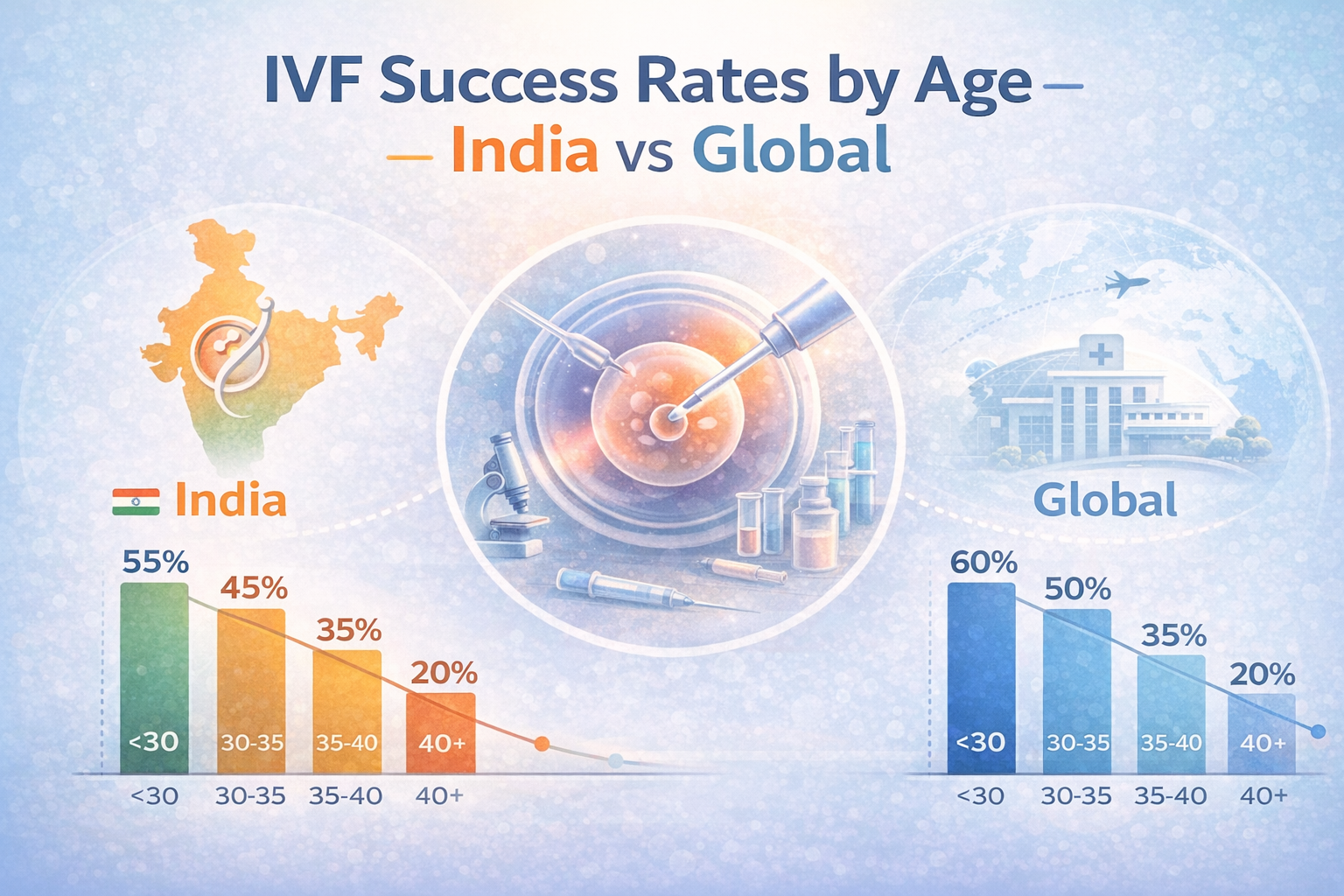
IVF Success Rate by Age in India
While success rates vary between clinics depending on lab standards and patient selection, the following ranges reflect typical outcomes in well-equipped Indian fertility centers.
Under 30 Years
- Live birth rate per cycle: 50–60%
- Egg quality is typically strong
- Lower chromosomal abnormality rates
- Higher embryo implantation probability
This age group generally requires fewer cycles to achieve pregnancy.
30–34 Years
- Live birth rate per cycle: 45–55%
- Slight gradual decline in ovarian reserve
- Still favorable response to stimulation
Most patients in this group have high cumulative success within 1–2 cycles.
35–37 Years
- Live birth rate per cycle: 35–45%
- Noticeable decline in egg quality
- Increased risk of chromosomal abnormalities
- More frequent recommendation for blastocyst culture or genetic testing
Timely treatment is strongly advised in this age bracket.
38–40 Years
- Live birth rate per cycle: 20–30%
- Reduced ovarian reserve
- Higher miscarriage rates
- Often require multiple cycles
- May benefit from ICSI and advanced lab techniques
At this stage, individualized protocol optimization becomes critical.
Above 40 Years
- Live birth rate per cycle: 5–15% (using own eggs)
- Significant decline in egg quantity and quality
- Higher risk of implantation failure
- Donor egg IVF dramatically improves success (up to 50–60% depending on donor age)
Counseling becomes particularly important to set realistic expectations.
Why Age Impacts IVF So Strongly
Female reproductive biology is age-sensitive because:
- Women are born with a fixed number of eggs
- Egg quality declines progressively
- Chromosomal errors increase with age
- Ovarian response to stimulation reduces
Even with advanced laboratory techniques, egg quality remains the limiting factor.
Role of Male Age
While female age is primary, advanced paternal age can also influence:
- Sperm DNA fragmentation
- Embryo quality
- Miscarriage risk
However, its impact is generally less pronounced than maternal age.
Cumulative Success Matters More Than Single-Cycle Results
One IVF cycle does not define overall probability.
For example:
- A 35-year-old woman with a 40% per-cycle success rate may have 70–80% cumulative success over three cycles.
Patients should discuss cumulative strategy rather than focusing solely on one attempt.
Factors Beyond Age That Influence Success
Although age is dominant, other determinants include:
- AMH levels (ovarian reserve marker)
- Endometrial receptivity
- Presence of PCOS or endometriosis
- Sperm quality
- Lifestyle factors (BMI, smoking, stress)
- Lab quality and embryologist expertise
Two women of the same age can have very different success probabilities.
Success Rates in India vs Global Standards
Top Indian IVF centers report success rates comparable to international benchmarks. High patient volumes, advanced embryology labs, and experienced fertility specialists contribute to competitive outcomes.
However, patients must ensure:
- Transparent reporting
- Ethical practices
- Individualized treatment protocols
Reviva IVF follows evidence-based protocols and patient-specific treatment planning to ensure realistic expectations and optimal outcomes.
Emotional Perspective on IVF Statistics
Statistics guide decisions—but they do not predict individual outcomes.
Fertility treatment combines:
- Biological variables
- Laboratory science
- Clinical expertise
- Emotional resilience
Age should encourage timely action—not panic.
Key Takeaways
- IVF success declines progressively after 35 and sharply after 40.
- Live birth rate is the most meaningful metric.
- Cumulative success across multiple cycles provides a more accurate perspective.
- Egg quality—not technology—is the primary age-related limitation.
- Early fertility consultation improves probability and reduces emotional stress.


