Trying for Baby for Years? This Might Be the Real Reason

Many couples spend years trying to conceive without success, often without understanding the root cause. Infertility is not always obvious, and delayed diagnosis can impact treatment outcomes. Seeking help from a trusted Infertility Clinic Chandigarh, like Reviva IVF, can make a significant difference in identifying and addressing underlying issues early.

Common Reasons Behind Delayed Conception

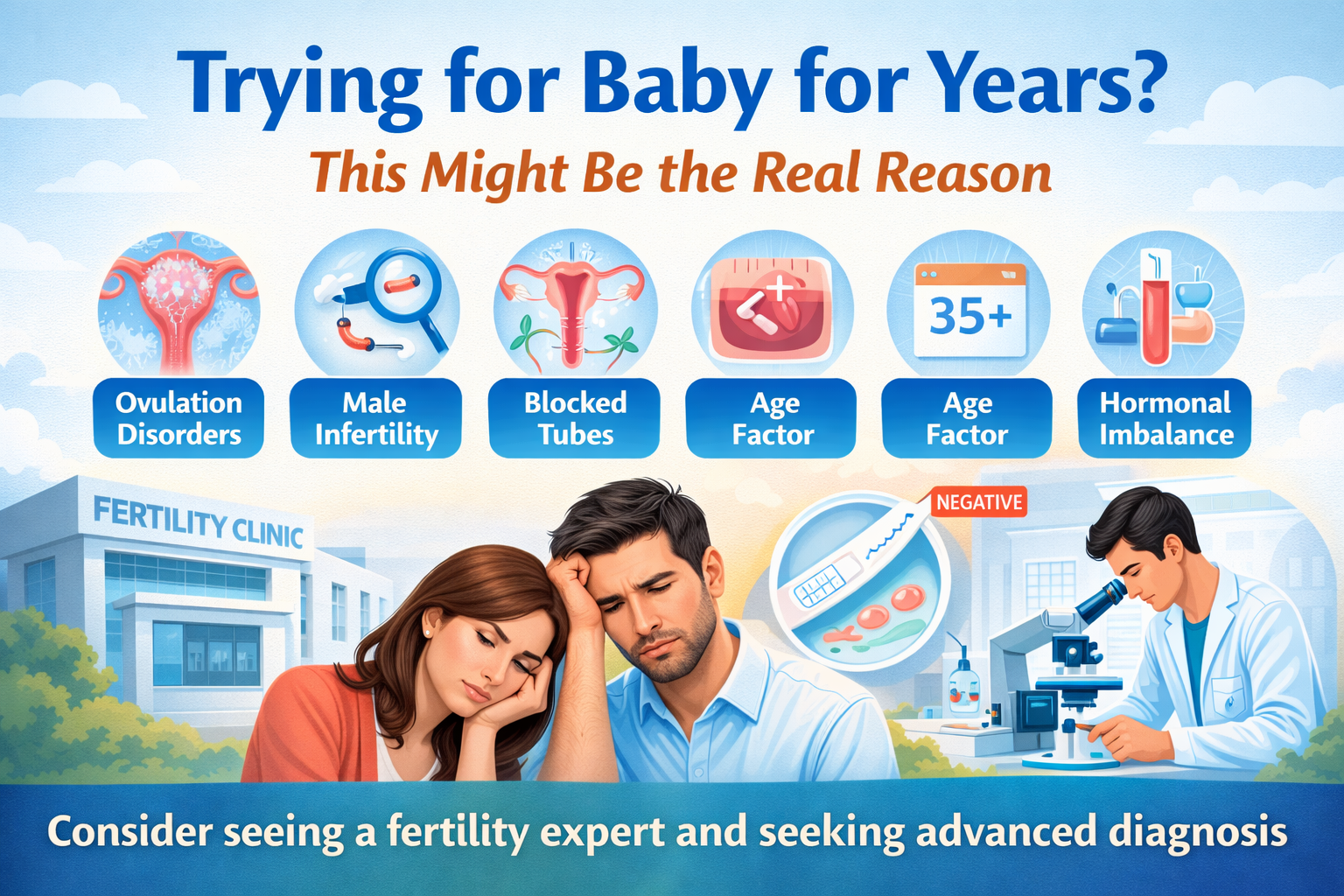
Ovulation Disorders

Conditions like Polycystic Ovary Syndrome can disrupt regular ovulation, making conception difficult.

Male Factor Infertility

Low sperm count, poor motility, or abnormal morphology contribute significantly to infertility cases.

Blocked Fallopian Tubes

Tubal blockages prevent sperm from reaching the egg, making natural conception nearly impossible.

Age-Related Fertility Decline

Fertility declines significantly after 35, affecting both egg quality and quantity, which may require advanced treatments available at the Best IVF Center in Chandigarh.

Hormonal Imbalance

Thyroid disorders and prolactin imbalances can interfere with ovulation and implantation.

Lifestyle Factors

When Should You See a Fertility Expert?

  • Trying for 1 year (under 35)
  • Trying for 6 months (above 35)
  • History of irregular cycles or miscarriages
    Consulting experts at Reviva IVF ensures early diagnosis and access to Affordable IVF Packages tailored to your needs.

Advanced Diagnosis Makes the Difference

Modern fertility clinics use:

  • Hormonal profiling
  • Ultrasound monitoring
  • Semen analysis
  • Genetic screening

How IVF Can Help

In Vitro Fertilization bypasses many natural barriers:

  • Fertilization happens in a lab
  • Embryos are carefully monitored
  • Higher chances of success in complex cases

Psychological Impact of Long-Term Infertility

Years of trying can lead to:

  • Emotional distress
  • Relationship strain
  • Anxiety and depression

Seeking timely help reduces this burden.

Conclusion

If you’ve been trying for years, the issue may be more complex than timing. Early diagnosis and expert guidance from Reviva IVF can transform your chances of parenthood.

Best Route & Stay Guide for IVF Patients Visiting Chandigarh from Nearby Cities

For couples planning fertility treatment, travel logistics can feel overwhelming. Chandigarh has emerged as a leading IVF destination in North India due to its medical infrastructure, accessibility, and patient-friendly environment. This guide simplifies travel routes, accommodation, and planning for IVF patients visiting from nearby cities—while helping you discover the Best IVF Center in Chandigarh offering Affordable IVF Packages.

Why Chandigarh is Preferred for IVF Treatment

Chandigarh offers a unique combination of:

  • Advanced fertility clinics
  • Clean and organized city planning
  • Easy connectivity
  • Safe environment for outstation patients

Clinics like Reviva IVF, a leading Infertility Clinic in Chandigarh, provide structured treatment plans, making it easier for patients travelling from other regions. Their transparent approach makes them a preferred choice for many couples.

Best Travel Routes to Chandigarh

By Road

Chandigarh is well connected via highways:

  • From Delhi: Approx. 4–5 hours via NH44
  • From Ludhiana: Around 2 hours
  • From Shimla: 3–4 hours

Private cars and Volvo buses are common options.

By Train

Major railway station: Chandigarh Railway Station
Well-connected routes from:

  • Delhi
  • Amritsar
  • Jaipur

Trains are affordable and convenient for couples traveling long distances.

By Air

Nearest airport: Chandigarh International Airport
Flights available from:

  • Mumbai
  • Bangalore
  • Delhi

Ideal for NRI couples or patients traveling from distant cities seeking the Infertility Clinic in Chandigarh.

Best Areas to Stay in Chandigarh

Sector 17 Chandigarh

  • Central location
  • Easy access to transport and markets

Sector 22 Chandigarh

  • Budget-friendly hotels
  • Popular among medical travelers

Mohali

  • Close to hospitals and clinics
  • Quiet and less crowded

Types of Accommodation

Hotels

  • Ideal for short stays (3–7 days)
  • Options from budget to luxury

Service Apartments

  • Suitable for longer IVF cycles
  • More privacy and kitchen facilities

Guest Houses

  • Affordable and comfortable
  • Often located near hospitals

How Long Should You Stay for IVF?

A typical IVF cycle requires:

  • 10–14 days for stimulation and monitoring
  • 2–5 days post embryo transfer

Doctors may recommend additional stay depending on individual cases.

Tips for IVF Travelers

  • Book accommodation near your clinic
  • Avoid long-distance daily travel
  • Keep medical reports organized
  • Plan flexible return tickets
  • Choose calm, hygienic environments

Emotional & Physical Comfort Matters

IVF is not just medical—it’s emotional. A stress-free stay improves overall experience and potentially treatment outcomes.

Conclusion

With proper planning, IVF treatment in Chandigarh can be smooth and comfortable. From excellent connectivity to patient-friendly infrastructure, the city supports couples throughout their fertility journey.

What Is the Success Rate of IVF by Age in India?

When couples consider IVF, the most pressing question is: “What are our chances of success?”

While several factors influence IVF outcomes, female age remains the single most important predictor of success. Ovarian reserve, egg quality, embryo development potential, and implantation rates are all strongly age-dependent.

This article explains IVF success rates in India by age group, what those numbers truly mean, and how couples should interpret them realistically.


How IVF Success Rates Are Measured

Before examining age-based data, it is important to understand how success is calculated. Clinics may report:

  • Clinical pregnancy rate (heartbeat seen on ultrasound)
  • Implantation rate
  • Live birth rate (most meaningful outcome)
  • Cumulative pregnancy rate (over multiple cycles)

Live birth rate per cycle is considered the most clinically relevant metric.


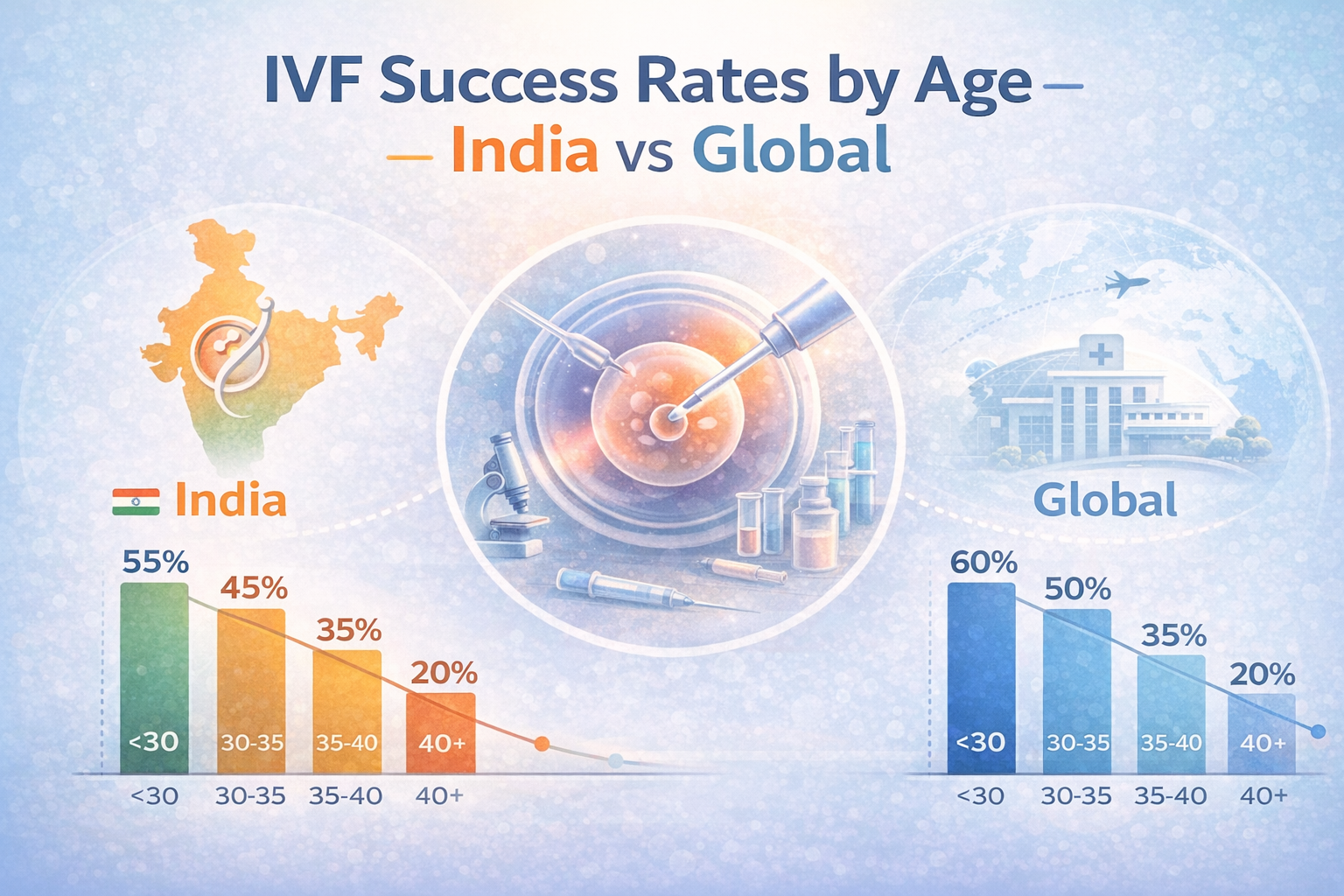
IVF Success Rate by Age in India

While success rates vary between clinics depending on lab standards and patient selection, the following ranges reflect typical outcomes in well-equipped Indian fertility centers.

Under 30 Years

  • Live birth rate per cycle: 50–60%
  • Egg quality is typically strong
  • Lower chromosomal abnormality rates
  • Higher embryo implantation probability

This age group generally requires fewer cycles to achieve pregnancy.


30–34 Years

  • Live birth rate per cycle: 45–55%
  • Slight gradual decline in ovarian reserve
  • Still favorable response to stimulation

Most patients in this group have high cumulative success within 1–2 cycles.


35–37 Years

  • Live birth rate per cycle: 35–45%
  • Noticeable decline in egg quality
  • Increased risk of chromosomal abnormalities
  • More frequent recommendation for blastocyst culture or genetic testing

Timely treatment is strongly advised in this age bracket.


38–40 Years

  • Live birth rate per cycle: 20–30%
  • Reduced ovarian reserve
  • Higher miscarriage rates
  • Often require multiple cycles
  • May benefit from ICSI and advanced lab techniques

At this stage, individualized protocol optimization becomes critical.


Above 40 Years

  • Live birth rate per cycle: 5–15% (using own eggs)
  • Significant decline in egg quantity and quality
  • Higher risk of implantation failure
  • Donor egg IVF dramatically improves success (up to 50–60% depending on donor age)

Counseling becomes particularly important to set realistic expectations.


Why Age Impacts IVF So Strongly

Female reproductive biology is age-sensitive because:

  • Women are born with a fixed number of eggs
  • Egg quality declines progressively
  • Chromosomal errors increase with age
  • Ovarian response to stimulation reduces

Even with advanced laboratory techniques, egg quality remains the limiting factor.


Role of Male Age

While female age is primary, advanced paternal age can also influence:

  • Sperm DNA fragmentation
  • Embryo quality
  • Miscarriage risk

However, its impact is generally less pronounced than maternal age.


Cumulative Success Matters More Than Single-Cycle Results

One IVF cycle does not define overall probability.

For example:

  • A 35-year-old woman with a 40% per-cycle success rate may have 70–80% cumulative success over three cycles.

Patients should discuss cumulative strategy rather than focusing solely on one attempt.


Factors Beyond Age That Influence Success

Although age is dominant, other determinants include:

  • AMH levels (ovarian reserve marker)
  • Endometrial receptivity
  • Presence of PCOS or endometriosis
  • Sperm quality
  • Lifestyle factors (BMI, smoking, stress)
  • Lab quality and embryologist expertise

Two women of the same age can have very different success probabilities.


Success Rates in India vs Global Standards

Top Indian IVF centers report success rates comparable to international benchmarks. High patient volumes, advanced embryology labs, and experienced fertility specialists contribute to competitive outcomes.

However, patients must ensure:

  • Transparent reporting
  • Ethical practices
  • Individualized treatment protocols

Reviva IVF follows evidence-based protocols and patient-specific treatment planning to ensure realistic expectations and optimal outcomes.


Emotional Perspective on IVF Statistics

Statistics guide decisions—but they do not predict individual outcomes.

Fertility treatment combines:

  • Biological variables
  • Laboratory science
  • Clinical expertise
  • Emotional resilience

Age should encourage timely action—not panic.


Key Takeaways

  • IVF success declines progressively after 35 and sharply after 40.
  • Live birth rate is the most meaningful metric.
  • Cumulative success across multiple cycles provides a more accurate perspective.
  • Egg quality—not technology—is the primary age-related limitation.
  • Early fertility consultation improves probability and reduces emotional stress.