



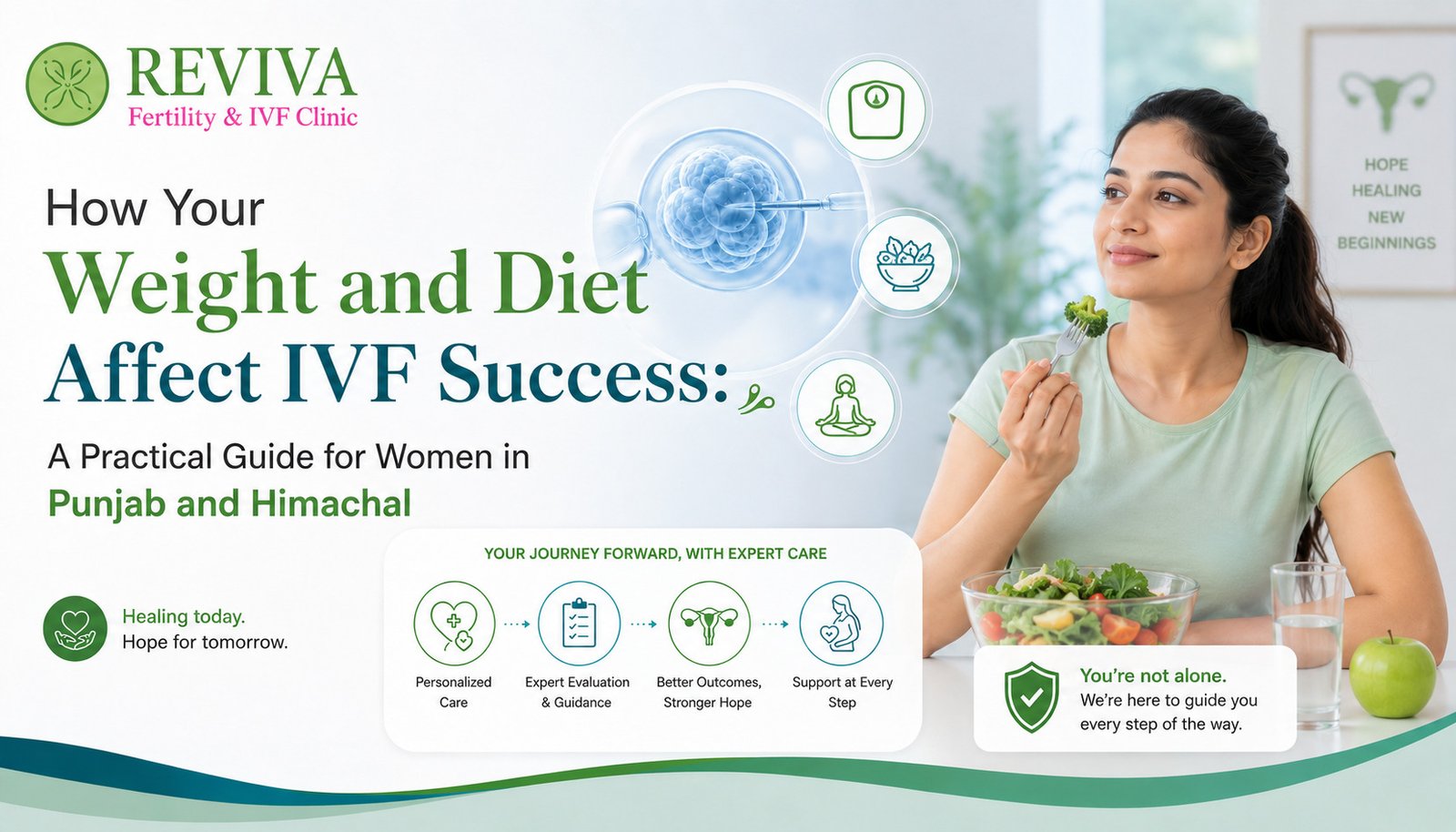
For many women undergoing IVF treatment, weight and diet are often overlooked, even though they can directly influence fertility outcomes. Hormonal balance, egg quality, ovulation, implantation, and the body’s response to IVF medications are all closely connected to lifestyle habits. At Reviva IVF, fertility specialists frequently see better IVF success rates in patients who focus not only on medical treatment but also on improving nutrition, physical activity, and overall metabolic health before starting their IVF cycle.
Why Weight Matters
Body weight directly affects:
- Hormonal balance
- Egg quality
- Implantation success
BMI Impact
- BMI >30 → Lower IVF success rates
- BMI <18 → Hormonal disruption
How Diet Influences Fertility
Your diet affects:
- Insulin levels
- Inflammation
- Egg health
What We Recommend Clinically
1. Balanced Macronutrients
- Protein: Eggs, paneer, lentils
- Healthy fats: Nuts, seeds, ghee (in moderation)
- Complex carbs: Whole grains
2. Avoid
- Refined sugar
- Processed food
- Excess dairy (in some PCOS cases)
3. Micronutrients That Matter
- Folic acid
- Vitamin D
- Omega-3 fatty acids
Regional Diet Adjustments
In Punjab & Himachal:
- Reduce excess wheat and sugar-heavy diets
- Balance traditional foods with portion control
Physical Activity
- 30–40 minutes daily
- Focus on consistency, not intensity
Before Starting IVF
We often recommend:
- 6–8 weeks of lifestyle correction before cycle initiation
Realistic Expectation
Even a 5–10% weight reduction can significantly improve outcomes.
Clinical Insight: The patients who treat IVF as a medical + lifestyle journey always have better results.
FAQs
Does weight really affect IVF success?
Yes. Both overweight and underweight conditions can affect hormones, ovulation, egg quality, and implantation rates.
What is the ideal BMI before IVF?
Most fertility specialists prefer a BMI between 18.5 and 24.9 for optimal IVF outcomes, though treatment plans are individualized.
Can diet improve egg quality?
A nutrient-rich diet with balanced proteins, healthy fats, vitamins, and antioxidants may help support egg and reproductive health.
How much exercise is recommended during IVF preparation?
Moderate activity such as walking, yoga, or light workouts for 30–40 minutes daily is generally recommended.
How long before IVF should lifestyle changes begin?
Most clinics recommend starting diet and lifestyle improvements at least 6–8 weeks before beginning an IVF cycle.


