
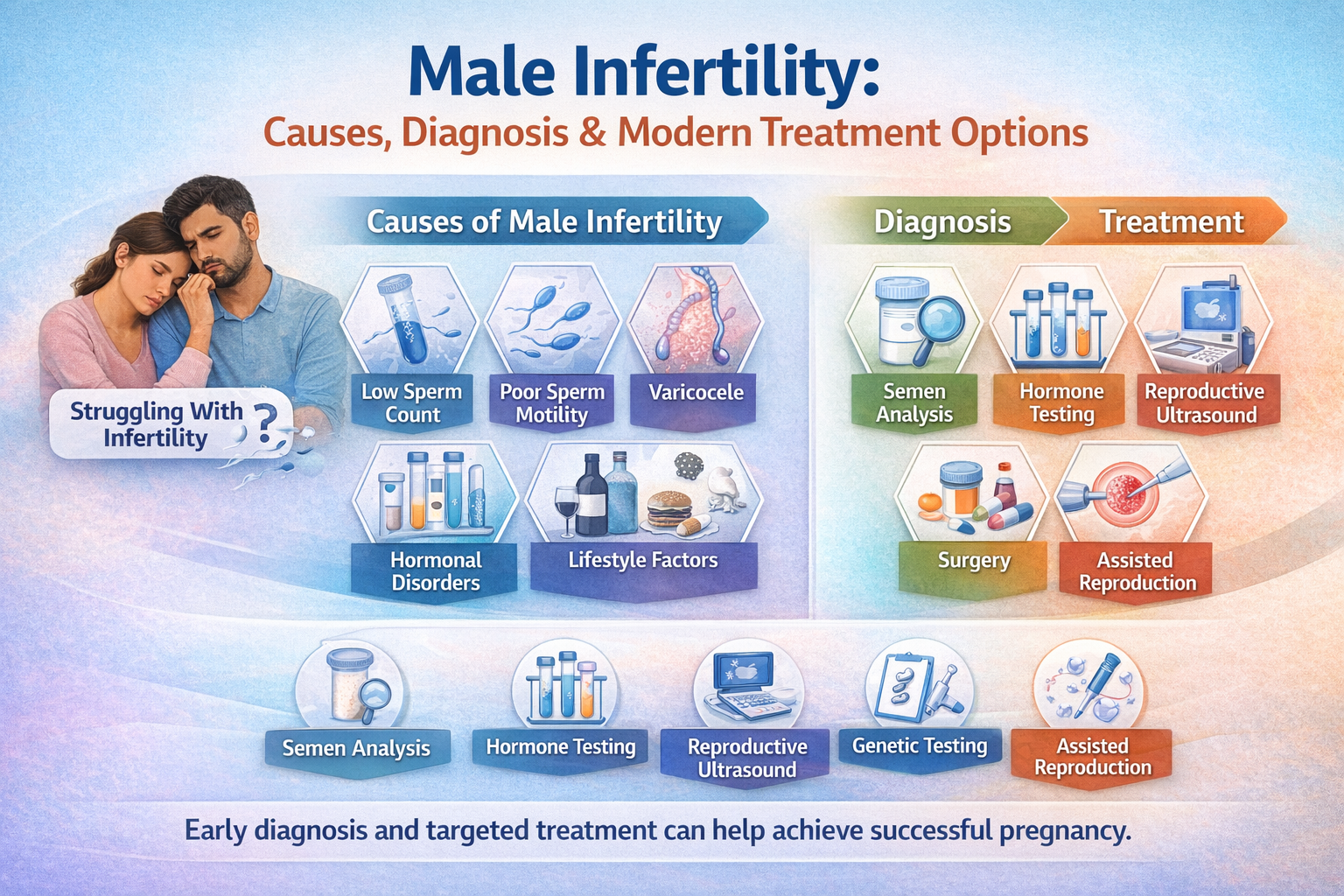
Male Infertility: Causes, Diagnosis & Modern Treatment Options

Infertility affects millions of couples worldwide, and in nearly 40–50% of cases, male factors contribute to the problem. Understanding male infertility is essential for early diagnosis and effective treatment.

What is Male Infertility?

Male infertility occurs when a man has difficulty causing pregnancy due to problems related to sperm production, sperm function, or sperm delivery.

Common symptoms may include:

Often, male infertility does not show obvious symptoms and is diagnosed only after medical testing.

Common Causes of Male Infertility

1. Low Sperm Production

Some men produce fewer sperm than normal, reducing the chances of fertilization.

2. Poor Sperm Motility

Motility refers to the ability of sperm to swim effectively toward the egg.

3. Varicocele

Varicocele is an enlargement of veins in the scrotum that can affect sperm quality.

4. Hormonal Disorders

Hormones play an essential role in sperm production. Imbalances can lead to infertility.

5. Lifestyle Factors

Certain lifestyle habits may reduce sperm health, including:

  • Smoking
  • Excess alcohol
  • Obesity
  • Stress
  • Poor diet

6. Medical Conditions

Infections, genetic disorders, or previous surgeries may also affect fertility.

How Male Infertility is Diagnosed

Diagnosis usually begins with a semen analysis, which evaluates sperm count, motility, and morphology.

Other tests may include:

  • Hormone testing
  • Ultrasound of reproductive organs
  • Genetic testing
  • Sperm DNA fragmentation test

These tests help fertility specialists determine the underlying cause.

Modern Treatment Options

Fortunately, many cases of male infertility can be treated successfully.

Lifestyle Improvements

Healthy habits can significantly improve sperm health.

  • Balanced diet
  • Regular exercise
  • Avoiding tobacco and alcohol
  • Stress management

Medications

Hormonal medications may help correct imbalances affecting sperm production.

Surgical Treatments

Procedures like varicocele repair can improve sperm quality in some cases.

Assisted Reproductive Techniques

Modern fertility treatments offer hope for couples struggling with male infertility.

IUI (Intrauterine Insemination): Processed sperm is directly placed in the uterus.

ICSI (Intracytoplasmic Sperm Injection): A single healthy sperm is injected directly into the egg.

IVF (In Vitro Fertilization): Eggs and sperm are combined in a laboratory to form embryos.

Importance of Early Evaluation

Many couples assume infertility is only related to women, but male fertility plays an equally important role. Early testing can save time and help couples choose the right treatment.

If you have been trying to conceive for more than a year without success, consulting Reviva IVF fertility specialists can help identify the cause and guide you toward effective solutions.

Role of Male Fertility Evaluation in Treatment Planning

Infertility is often perceived as a predominantly female issue. However, clinical data consistently shows that male factors contribute to nearly 40–50% of infertility cases, either independently or in combination with female factors.

A comprehensive male fertility evaluation is not optional—it is foundational to designing an effective, time-efficient, and cost-conscious fertility treatment plan.

This article explains why male assessment matters, what tests are involved, and how results directly influence decisions such as IUI, IVF, or ICSI.


Why Male Fertility Assessment Is Critical

Delaying male evaluation can:

  • Prolong treatment timelines
  • Increase unnecessary medication exposure for the female partner
  • Lead to repeated failed cycles
  • Escalate overall treatment costs

In structured fertility protocols, male testing is typically recommended early in the diagnostic phase.


Primary Male Fertility Tests

1. Semen Analysis

This is the cornerstone investigation and is commonly referred to as a Semen Test for Fertility. It evaluates the overall health and reproductive potential of sperm by assessing:

  • Sperm count (concentration)
  • Motility (movement quality)
  • Morphology (shape and structure)
  • Semen volume
  • Liquefaction time

Abnormal findings may indicate:

  • Oligospermia (low sperm count)
  • Asthenozoospermia (poor motility)
  • Teratozoospermia (abnormal morphology)
  • Azoospermia (absence of sperm)

Each condition requires a different therapeutic strategy.


2. Hormonal Profile

Blood tests may include:

  • Testosterone
  • FSH (Follicle Stimulating Hormone)
  • LH (Luteinizing Hormone)
  • Prolactin

Hormonal imbalances can impair sperm production and may require medical correction before ART (Assisted Reproductive Techniques).


3. Scrotal Ultrasound

This helps detect:

  • Varicocele (enlarged scrotal veins)
  • Structural abnormalities
  • Testicular pathology

Varicocele repair, when indicated, can improve sperm parameters in select patients.


4. Advanced Sperm Function Tests

In cases of repeated IVF failure or unexplained infertility, advanced tests may be advised:

These are particularly important in severe male factor cases.


How Male Evaluation Shapes Treatment Planning

The findings from male testing directly influence the choice of fertility treatment.

Scenario 1: Mild Abnormalities

If sperm count and motility are mildly reduced:

  • Lifestyle modifications
  • Antioxidant therapy
  • Timed intercourse or IUI

may be sufficient.


Scenario 2: Moderate Male Factor

When sperm motility or morphology is significantly compromised:

  • IVF may be recommended
  • ICSI (Intracytoplasmic Sperm Injection) is often preferred

ICSI Treatment For Male fertility allows a single healthy sperm to be injected directly into the egg, bypassing natural fertilization barriers.


Scenario 3: Severe Male Factor / Azoospermia

If no sperm is found in ejaculate:

In some cases, donor sperm may be discussed depending on diagnosis and couple preference.


Common Causes of Male Infertility

  • Varicocele
  • Hormonal disorders
  • Infections
  • Genetic abnormalities
  • Lifestyle factors (smoking, obesity, alcohol)
  • Chronic stress
  • Environmental toxin exposure

Addressing modifiable risk factors can significantly improve outcomes.


Psychological Impact and Counseling

Male infertility can cause emotional distress, stigma, and performance anxiety. A structured evaluation:

  • Reduces uncertainty
  • Encourages shared responsibility
  • Improves treatment adherence
  • Strengthens couple collaboration

Modern fertility care emphasizes a couple-centric approach rather than isolating one partner.


When Should Men Get Tested?

Evaluation is recommended if:

  • Pregnancy has not occurred after 12 months of regular unprotected intercourse
  • Female partner is over 35 and conception hasn’t occurred in 6 months
  • There is known medical or surgical history affecting fertility
  • There is history of testicular injury or undescended testes
  • Previous IVF/IUI cycles have failed

Early testing reduces unnecessary delays.


Role of Integrated Fertility Clinics

In comprehensive centers like Reviva IVF, male fertility assessment is integrated into initial consultations. This ensures:

  • Parallel evaluation of both partners
  • Evidence-based decision-making
  • Personalized treatment protocols
  • Cost optimization by avoiding ineffective cycles

Key Takeaways

  • Male factors contribute to nearly half of infertility cases.
  • Semen analysis is the first-line diagnostic tool.
  • Advanced testing may be required in complex cases.
  • Treatment choice (IUI vs IVF vs ICSI) depends heavily on sperm parameters.
  • Early evaluation improves success rates and reduces financial burden.