



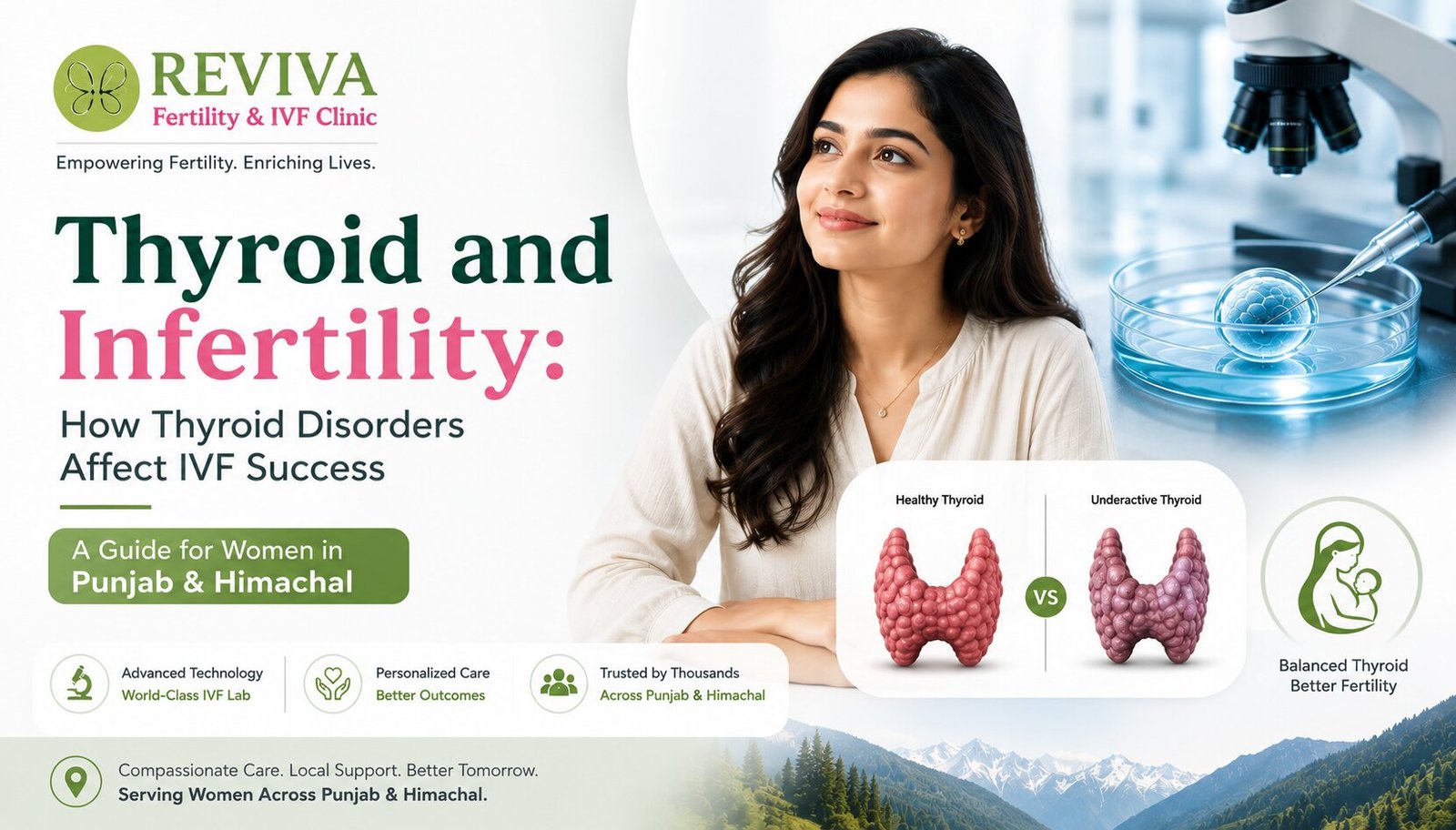
Thyroid disorders are often silent but significantly impact fertility. Many women come to us after failed cycles, only to discover underlying thyroid imbalance.
Why Thyroid Matters in Fertility
The thyroid gland regulates metabolism, but it also plays a key role in:
- Ovulation
- Egg quality
- Endometrial receptivity
- Early pregnancy maintenance
Common Thyroid Conditions
Hypothyroidism (Underactive Thyroid)
- Irregular cycles
- Poor ovulation
- Increased miscarriage risk
Hyperthyroidism (Overactive Thyroid)
- Hormonal instability
- Implantation failure
Ideal Thyroid Levels for IVF
For women trying to conceive:
- TSH should ideally be between 1.5–2.5 mIU/L
Even “borderline” levels can impact implantation.
At Reviva IVF, thyroid evaluation is an essential part of fertility assessment before starting IVF treatment.
Impact on IVF Success
If thyroid is not controlled:
- Lower fertilization rates
- Poor embryo development
- Increased risk of early pregnancy loss
How We Manage It
Before IVF:
- Thyroid function tests (TSH, Free T3, Free T4)
- Thyroid antibodies if required
Treatment includes:
- Levothyroxine for hypothyroidism
- Anti-thyroid medications for hyperthyroidism
We monitor levels throughout the cycle and early pregnancy.
Regional Reality (Punjab & Himachal)
We see higher thyroid dysfunction due to:
- Dietary iodine imbalance
- Autoimmune prevalence
- Lifestyle stress factors
Key Advice
- Never ignore mild thyroid abnormalities
- Regular monitoring is essential—even after conception
Clinical Insight: Many “unexplained infertility” cases are actually undiagnosed thyroid issues.


