



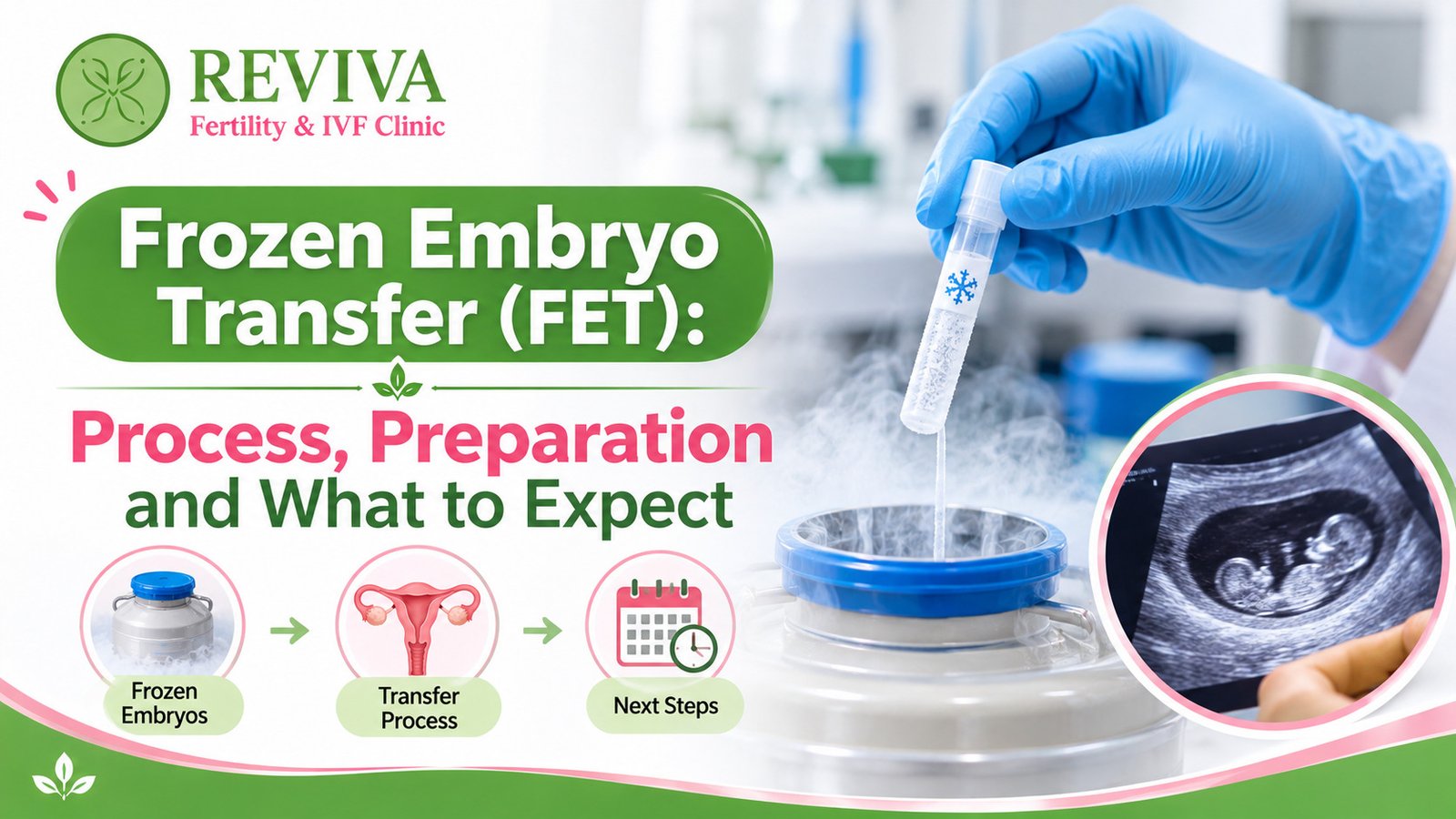
Frozen Embryo Transfer (FET) is an assisted reproductive procedure in which an embryo that was created during an earlier IVF cycle, frozen and stored, is thawed and transferred into the uterus at a later time.
FET is an established part of modern assisted reproductive technology (ART). It allows embryo transfer to take place separately from the ovarian stimulation and egg retrieval stages of an IVF cycle.
The procedure involves preparing the uterine lining, assessing the timing of embryo transfer, thawing the stored embryo and placing it into the uterine cavity.
Understanding the FET process, the different preparation protocols and the factors that influence treatment outcomes can help individuals make informed decisions about reproductive healthcare.
What Is Frozen Embryo Transfer?
Frozen Embryo Transfer is a procedure in which a previously cryopreserved embryo is thawed and transferred into the uterus.
During an IVF cycle, eggs are collected from the ovaries and fertilised with sperm in a laboratory. The resulting embryos are observed as they develop.
Embryos considered suitable for cryopreservation may be frozen and stored for future use.
Cryopreservation is the process of preserving biological material at very low temperatures. In contemporary IVF laboratories, embryos are commonly frozen using a technique called vitrification.
Vitrification involves rapid cooling with the use of cryoprotective substances to reduce the formation of ice crystals that may damage cells.
When a frozen embryo transfer is planned, the embryo is warmed under controlled laboratory conditions before being considered for transfer.
Why Is Frozen Embryo Transfer Performed?
There are several clinical circumstances in which FET may be considered.
1. Embryos Remaining After an Earlier IVF Cycle
When more than one suitable embryo develops during an IVF cycle, embryos not transferred in the initial cycle may be cryopreserved.
These embryos may be considered for future transfers, subject to applicable consent, storage and regulatory requirements.
2. Freeze-All Approach
In some IVF cycles, a decision may be made to freeze all suitable embryos rather than perform a fresh transfer.
This may be considered when there are clinical reasons to defer embryo transfer, including:
- Increased risk of ovarian hyperstimulation syndrome (OHSS).
- Elevated progesterone levels during ovarian stimulation.
- Concerns regarding the uterine environment.
- Certain medical or treatment-related circumstances.
The decision depends on individual clinical findings.
3. Medical Reasons to Delay Embryo Transfer
In selected situations, embryo transfer may be postponed to allow additional medical assessment or management of an underlying condition.
The stored embryos can then be considered for transfer when the clinical circumstances are appropriate.
4. Use of Previously Frozen Donor Embryos
FET may also be used in treatment involving previously cryopreserved donor embryos, subject to applicable legal and regulatory requirements.
How Does Frozen Embryo Transfer Work?
The FET process involves several stages. The exact sequence depends on whether the cycle follows a natural, modified natural or hormone-replacement protocol.
Step 1: Review of Medical and Reproductive History
Before an FET cycle, the medical team reviews relevant reproductive information.
This may include:
- Previous IVF treatment.
- Embryo development and freezing records.
- Age at the time of egg collection.
- Previous pregnancy history.
- Uterine health.
- Menstrual cycle regularity.
- Previous medical conditions.
- Relevant investigations.
The embryo’s developmental stage and storage records are also considered.
Step 2: Preparation of the Uterine Lining
The endometrium is the inner lining of the uterus.
For an embryo to implant, the endometrium must undergo appropriate changes under the influence of reproductive hormones.
The timing of embryo transfer is coordinated with the developmental stage of the embryo and the duration of progesterone exposure.
There are different approaches to preparing the endometrium.
Step 3: Monitoring the Endometrium
Ultrasound examination may be used to assess the endometrial lining and monitor ovarian activity.
Blood tests may also be performed to assess relevant hormone levels.
The purpose is to determine whether the endometrium and hormonal environment are suitable for the planned transfer.
Step 4: Embryo Warming or Thawing
Once the transfer timing is established, the embryology laboratory warms the selected embryo.
The warming procedure involves carefully removing cryoprotective substances and assessing the embryo’s condition.
Not every embryo necessarily survives the freezing and warming process. The outcome depends on several factors, including embryo characteristics, cryopreservation technique and laboratory procedures.
Step 5: Embryo Transfer
The warmed embryo is loaded into a thin, flexible catheter.
The catheter is gently passed through the cervix into the uterine cavity, where the embryo is deposited.
Ultrasound guidance is commonly used to assist with accurate placement.
The procedure generally does not require general anaesthesia.
The number of embryos transferred is determined according to clinical considerations, applicable regulations and the objective of reducing avoidable multiple pregnancies.
Step 6: Pregnancy Testing
A pregnancy test is performed after the transfer at the time specified by the treating medical team.
A blood test measuring beta-human chorionic gonadotropin (beta-hCG) may be used to assess whether implantation has occurred.
If the test is positive, further monitoring and ultrasound examination may be recommended to assess the pregnancy’s location and development.
What Are the Different Types of Frozen Embryo Transfer Cycles?
The preparation method depends on menstrual cycle characteristics, ovulatory function and individual clinical considerations.
1. Natural Cycle FET
A natural cycle FET relies on the individual’s own menstrual cycle and spontaneous ovulation.
The development of the ovarian follicle and timing of ovulation are monitored.
Progesterone production following ovulation helps prepare the endometrium for implantation.
The embryo transfer is scheduled according to the timing of ovulation and the developmental stage of the frozen embryo.
This approach may be considered in individuals with regular ovulatory cycles.
2. Modified Natural Cycle FET
A modified natural cycle follows the body’s natural follicular development but may involve medication to help control or confirm the timing of ovulation.
Human chorionic gonadotropin (hCG) may be used in selected protocols to trigger ovulation.
The transfer is then scheduled according to the hormonal timing and embryo developmental stage.
3. Hormone Replacement Therapy (HRT) Cycle
A hormone replacement cycle uses medication to prepare the uterine lining.
Oestrogen is generally administered first to support endometrial development.
Progesterone is subsequently introduced to bring about the changes required for implantation.
The timing of progesterone exposure is coordinated with the developmental stage of the embryo.
This approach may be considered in individuals with irregular ovulation or when a programmed cycle is clinically appropriate.
The choice between natural, modified natural and programmed cycles depends on individual circumstances. No single protocol is suitable for everyone.
How Should Someone Prepare for Frozen Embryo Transfer?
Preparation for FET involves medical assessment, appropriate medication use and following the treatment schedule.
1. Complete the Recommended Investigations
Depending on the medical history, investigations may include:
- Pelvic or transvaginal ultrasound.
- Hormonal blood tests.
- Assessment of the uterine cavity when indicated.
- Review of previous IVF and embryo records.
- Relevant infection screening and other preconception investigations.
Not every individual requires every investigation.
2. Follow the Prescribed Medication Schedule
Medication may be used to prepare and support the endometrium.
Commonly used hormones include oestrogen and progesterone, depending on the selected protocol.
The timing and duration of these medications are important because the embryo and endometrium need to be appropriately synchronised.
Medication should not be started, stopped or modified without medical instructions.
3. Maintain General Health
General preconception health measures remain relevant.
These may include:
- Eating a balanced diet.
- Maintaining adequate hydration.
- Avoiding tobacco and recreational drugs.
- Avoiding excessive alcohol consumption.
- Managing existing medical conditions.
- Reviewing prescribed medications with a healthcare professional.
- Following appropriate folic acid supplementation guidance.
There is no specific food or supplement proven to guarantee successful implantation after FET.
4. Understand the Treatment Schedule
Individuals undergoing FET may have ultrasound examinations and blood tests at different stages of the cycle.
Following the prescribed schedule helps ensure that the timing of embryo transfer is coordinated appropriately.
What Happens on the Day of Frozen Embryo Transfer?
The transfer procedure is generally straightforward and does not usually require general anaesthesia.
The process commonly includes the following steps:
- Confirmation of patient identification and relevant treatment consent.
- Verification of embryo identification and laboratory records.
- Preparation of the transfer catheter.
- Positioning for the procedure.
- Ultrasound-guided insertion of the catheter through the cervix.
- Placement of the embryo into the uterine cavity.
- Removal and checking of the catheter by the clinical and laboratory team.
The procedure may cause mild discomfort, similar to that experienced during a gynaecological examination.
Some individuals may experience temporary cramping or light spotting afterwards.
The specific preparation instructions, including bladder requirements, depend on the transfer technique and the medical facility’s protocol.
What Happens After Frozen Embryo Transfer?
After the procedure, individuals are generally observed for a short period according to the treatment protocol.
Normal daily activities can usually be resumed, subject to individual medical advice.
1. Medication Support
Depending on the type of FET cycle, progesterone and sometimes oestrogen may be continued after transfer.
These hormones support the endometrium and early pregnancy when prescribed.
Medication should not be discontinued solely because of mild spotting, symptoms or the absence of pregnancy symptoms.
2. Physical Activity
Routine bed rest is not generally required after embryo transfer.
Normal light daily activities may usually be resumed.
The evidence does not establish that prolonged bed rest improves implantation or pregnancy outcomes.
Specific activity restrictions should be based on individual medical circumstances.
3. Symptoms After Transfer
Some individuals experience mild symptoms after FET, including:
- Mild abdominal cramping.
- Bloating.
- Breast tenderness.
- Fatigue.
- Light spotting.
These symptoms may be related to hormonal medication or other factors.
Their presence or absence cannot reliably determine whether implantation has occurred.
Severe abdominal pain, heavy bleeding, fever, fainting or significant discomfort requires prompt medical assessment.
4. Pregnancy Testing
A beta-hCG blood test or another recommended pregnancy test is performed on the date specified by the treating medical team.
Testing too early may produce misleading results.
If the result is positive, additional blood tests and an ultrasound examination may be recommended.
An early ultrasound helps assess the location of the pregnancy and subsequent development.
What Factors Influence Frozen Embryo Transfer Outcomes?
The outcome of FET depends on several biological, clinical and laboratory factors.
These include:
1. Age at the Time of Egg Collection
Age at the time the eggs were collected is an important factor because it is associated with the likelihood of chromosomal abnormalities in embryos.
The age at freezing is therefore relevant when considering the developmental potential of a stored embryo.
2. Embryo Developmental Stage
Embryos may be frozen at different developmental stages.
These include cleavage-stage embryos and blastocysts.
The developmental stage and characteristics of the embryo are considered during treatment planning.
3. Embryo Quality and Chromosomal Status
Embryo grading evaluates visible characteristics such as cell development and morphology.
However, morphological grading cannot establish chromosomal normality.
Where genetic testing has been performed, its findings may provide additional information, but testing also has limitations and does not guarantee pregnancy.
4. Endometrial Factors
The endometrium needs to undergo appropriate hormonal changes before embryo transfer.
Its thickness, appearance and timing may be assessed through ultrasound and other investigations when indicated.
5. Medical and Reproductive History
Previous reproductive history, uterine conditions, certain chronic illnesses and other clinical factors may influence pregnancy outcomes.
An individual assessment is required rather than relying on a single measurement or test.
What Are the Possible Risks and Limitations of FET?
Although FET is an established assisted reproductive procedure, it has limitations and potential risks.
1. Embryo Survival After Warming
Some embryos may not survive the warming process.
The likelihood depends on embryo characteristics, cryopreservation methods and laboratory procedures.
2. Implantation Failure
An embryo may not implant after transfer.
This can occur even when the embryo appears suitable for transfer and the endometrial preparation is considered appropriate.
3. Miscarriage
Pregnancy loss can occur following FET.
The risk depends on factors such as age at egg collection, embryo chromosomal characteristics and other medical conditions.
4. Ectopic Pregnancy
In uncommon cases, a pregnancy may develop outside the uterus.
An ectopic pregnancy is a potentially serious condition that requires medical assessment.
5. Multiple Pregnancy
When more than one embryo is transferred, the possibility of multiple pregnancy increases.
Multiple pregnancies are associated with higher risks of complications, including preterm birth and low birth weight.
Single embryo transfer is an important strategy for reducing avoidable multiple pregnancies.
6. Medication-Related Effects
Hormonal medication may cause side effects such as bloating, breast tenderness, nausea, headaches or mood changes.
The type and severity of symptoms depend on the medication and individual response.
Frequently Asked Questions About Frozen Embryo Transfer
1. Is frozen embryo transfer different from fresh embryo transfer?
Yes. In fresh embryo transfer, an embryo is transferred during the same IVF cycle in which the eggs were collected and fertilised. In FET, the embryo is frozen and transferred during a later treatment cycle.
2. Does every frozen embryo survive thawing?
No. Although modern vitrification techniques have improved embryo cryopreservation, not every embryo survives warming. Survival depends on several embryo-related and laboratory factors.
3. Is frozen embryo transfer painful?
The procedure is generally well tolerated. Some individuals may experience mild cramping or discomfort during catheter insertion, but general anaesthesia is not usually required.
4. Is bed rest necessary after FET?
Prolonged bed rest is not generally recommended as a way to improve implantation. Routine daily activities may usually be resumed, subject to individual medical instructions.
5. Can frozen embryos be transferred years after freezing?
Embryos may remain cryopreserved for extended periods. Their use depends on applicable storage regulations, consent requirements and individual clinical circumstances. Storage duration and legal requirements should be reviewed with the relevant fertility facility.
6. Does a frozen embryo transfer guarantee pregnancy?
No. FET does not guarantee implantation or pregnancy. Outcomes depend on embryo characteristics, age at egg collection, endometrial factors and other reproductive and medical considerations.
7. When is a pregnancy test performed after FET?
The timing depends on the embryo’s developmental stage and the treatment protocol. The treating medical team provides the appropriate testing date. Testing earlier than advised may lead to inaccurate interpretation.
Conclusion
Frozen Embryo Transfer is an established component of assisted reproductive technology that allows embryos created during an earlier IVF cycle to be transferred at a later time.
The process involves appropriate endometrial preparation, coordination of embryo and uterine development, laboratory warming of the embryo and careful transfer into the uterine cavity.
Although FET offers an additional opportunity to use previously cryopreserved embryos, its outcome depends on several individual biological and clinical factors.
Understanding the procedure, preparation protocols, potential risks and limitations is important for making informed decisions about reproductive health.


