


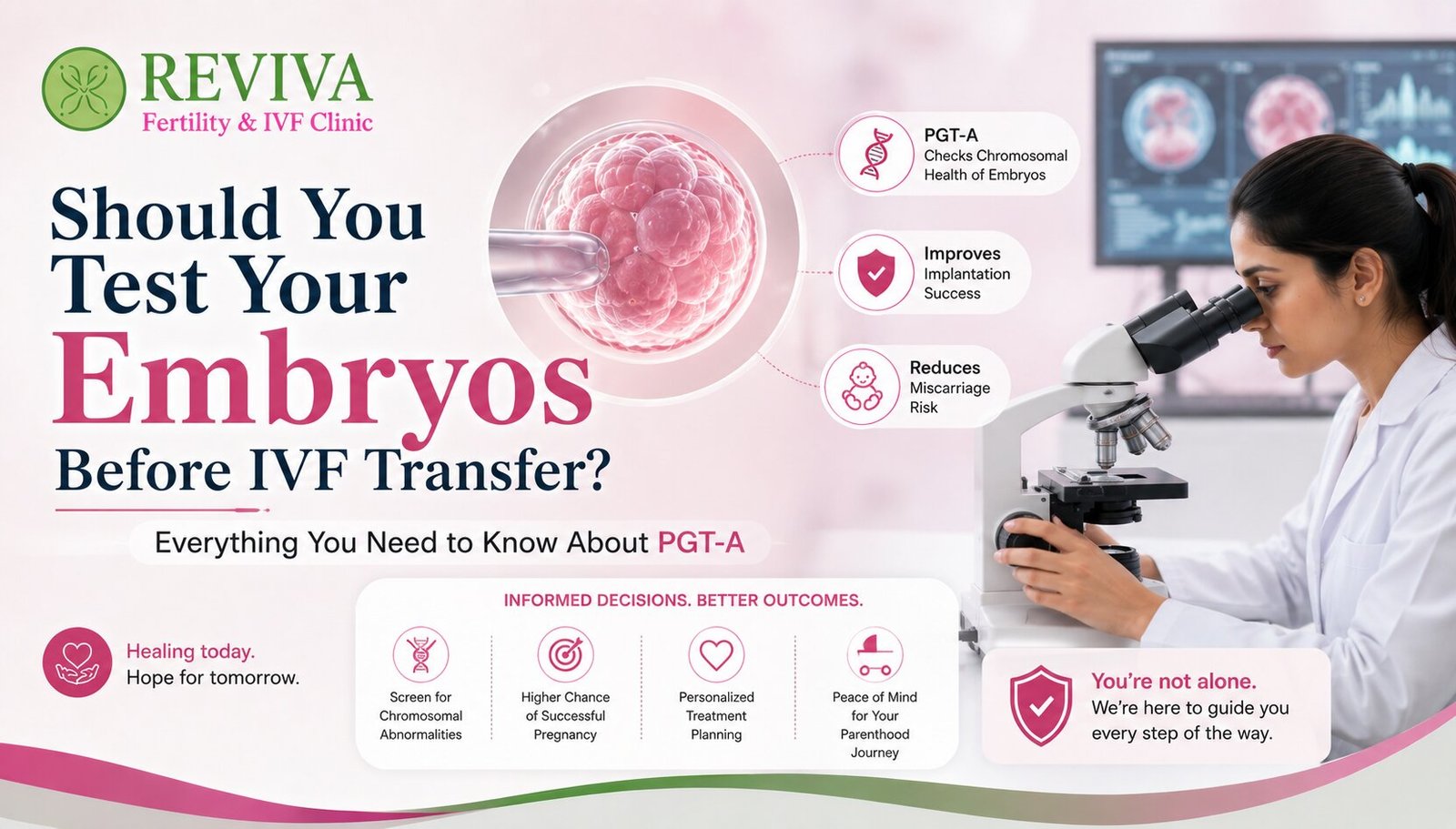
Starting an IVF journey often brings a mix of emotions—hope, excitement, nervousness, and many important decisions. Among the most common questions couples ask is: “Should we test our embryos before transfer?”
If you have heard about PGT-A and feel confused about whether it is necessary, you are not alone. Many couples wonder whether embryo testing can improve their chances of pregnancy or help reduce the risk of miscarriage.
The truth is simple: PGT-A can be highly beneficial for some couples, but it is not necessary for everyone.
Understanding what PGT-A does, how it works, and who benefits most can help you make a more confident decision with your fertility specialist.
At Reviva IVF, couples receive personalized fertility guidance backed by advanced reproductive technology and evidence-based treatment plans, helping them make informed choices throughout their IVF journey.
What Is PGT-A?
PGT-A (Preimplantation Genetic Testing for Aneuploidy) is a genetic screening test performed during an IVF cycle to check whether an embryo has the correct number of chromosomes before being transferred into the uterus.
A healthy embryo typically contains 46 chromosomes.
When an embryo has too many or too few chromosomes—a condition called aneuploidy—it may lead to:
- Failure of implantation
- Early miscarriage
- Genetic abnormalities
- Interrupted embryo development
PGT-A helps fertility specialists identify embryos with normal chromosome numbers so they can select the embryo with the highest potential for a successful pregnancy.
It is important to understand one key point: PGT-A does not improve embryo quality it simply helps identify the healthiest embryo available for transfer.
How Does PGT-A Work?
Many couples worry that embryo testing might damage the embryo. Fortunately, modern embryo biopsy techniques are highly advanced and carefully performed by experienced embryologists.
Step 1: Egg Retrieval and Fertilization
Eggs are collected during the IVF cycle and fertilized in a laboratory.
Step 2: Embryo Development
The embryos are allowed to grow for 5 to 6 days until they reach the blastocyst stage.
Step 3: Embryo Biopsy
A few cells are carefully removed from the outer layer of the embryo. These cells later form the placenta, not the baby itself.
Step 4: Genetic Testing
The sampled cells are sent to a specialized genetic laboratory for chromosomal screening.
Step 5: Embryo Freezing and Transfer
The embryos are safely frozen while results are processed. Once testing is complete, the healthiest embryo is selected for transfer.
Benefits of PGT-A
For many couples, PGT-A offers reassurance and improves fertility planning.
Better Embryo Selection
Traditionally, embryos are selected mainly based on appearance. PGT-A adds another important layer by evaluating chromosomal health.
Lower Risk of Miscarriage
Many miscarriages occur because of chromosomal abnormalities. Selecting a chromosomally normal embryo may reduce this risk.
Improved Implantation Chances
Healthy embryos are more likely to implant successfully in the uterus.
Fewer Failed IVF Transfers
PGT-A may reduce unsuccessful transfer attempts by identifying embryos less likely to result in pregnancy.
Supports Single Embryo Transfer
Because the selected embryo has already been genetically screened, doctors can often transfer one embryo while maintaining strong success rates. This helps reduce the risk of multiple pregnancies.
Who Should Consider PGT-A?
PGT-A is not required for every IVF patient. Your fertility specialist usually recommends it based on age, medical history, and fertility goals.
You may benefit from PGT-A if you:
- Are 37 years or older
- Have experienced repeated IVF failures
- Have recurrent miscarriages
- Carry a known chromosomal condition
- Have severe male-factor infertility
- Have multiple embryos available for selection
At Reviva IVF Genetic Testing Services, couples undergo detailed fertility assessments before deciding whether PGT-A is the right option.
Is PGT-A Necessary for Everyone?
The short answer is no.
Many couples achieve healthy pregnancies through IVF without embryo testing.
Whether PGT-A makes sense depends on several factors:
- Age
- Egg quality
- Previous pregnancy history
- Number of embryos available
- Medical conditions
- Family history of genetic disorders
This is why fertility care should always be personalized rather than based on a fixed approach.
Are There Any Limitations?
Like any medical procedure, PGT-A has limitations.
It is important to understand that:
- PGT-A cannot guarantee pregnancy
- It cannot guarantee a healthy baby
- Mosaic embryos can make interpretation complex
- It adds extra cost to IVF
- It may extend the IVF timeline because embryos are frozen during testing
For some couples, the additional testing provides peace of mind. For others, it may not significantly improve outcomes.
This decision should always be made with expert medical guidance.
Why Personalized Fertility Advice Matters
No two fertility journeys are the same.
A 28-year-old woman beginning her first IVF cycle has very different needs compared with a 40-year-old woman who has experienced multiple failed transfers.
That is why fertility specialists carefully evaluate each case before recommending advanced procedures such as PGT-A.
At Reviva IVF, the focus goes beyond simply achieving pregnancy. The clinic aims to maximize the chances of a healthy pregnancy through personalized treatment plans, modern embryology laboratories, advanced genetic testing, and compassionate patient care.
About Reviva IVF
Reviva IVF is a trusted fertility and reproductive care center dedicated to helping couples overcome infertility challenges through advanced medical treatments and compassionate support. The clinic offers a wide range of fertility services, including IVF, IUI, fertility assessments, genetic screening, ovulation management, and male infertility treatment.
With experienced fertility specialists and advanced laboratory technology, Reviva IVF creates customized fertility solutions tailored to every couple’s needs.
Final Thoughts
Choosing whether to test your embryos before transfer is an important decision, but it does not have to feel overwhelming.
PGT-A can be a powerful tool for selecting embryos with the highest potential for a healthy pregnancy especially for couples facing specific fertility or genetic concerns.
The most important step is having an open conversation with your fertility specialist. With the right guidance, you can make informed decisions that support your journey toward parenthood with greater confidence.


