


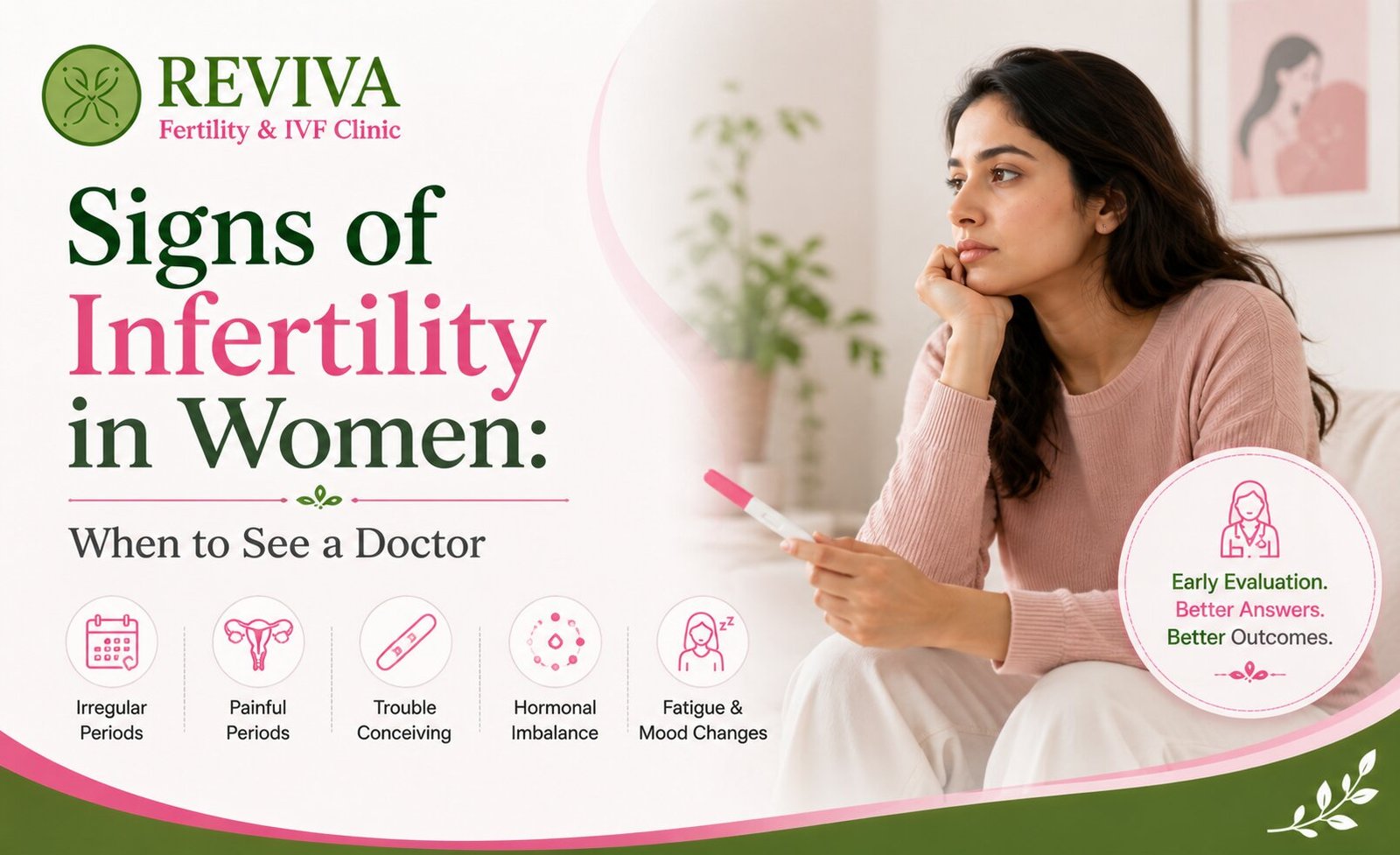
Infertility can be difficult to identify because it does not always cause obvious symptoms. Many women with fertility problems have regular periods and feel completely healthy. In other cases, changes in the menstrual cycle, pelvic pain, hormonal symptoms or a history of certain medical conditions may indicate that fertility evaluation is needed.
So, what are the signs of infertility in women, and when should you see a fertility specialist?
The most important point is that infertility is not diagnosed simply because pregnancy has not happened after a few months of trying. Age, menstrual history, ovulation, fallopian tube function, sperm health and several other factors can affect the ability to conceive.
According to the World Health Organization (WHO), infertility is a disease of the male or female reproductive system defined by the failure to achieve pregnancy after 12 months or more of regular unprotected sexual intercourse.
However, women do not always need to wait 12 months before seeking medical advice. Age and individual risk factors can make an earlier evaluation appropriate.
What Are the Common Signs of Infertility in Women?
There is no single symptom that proves a woman is infertile.
Some of the signs and situations that may warrant a fertility evaluation include:
- Irregular or absent periods
- Very painful periods
- Extremely heavy menstrual bleeding
- Difficulty predicting ovulation
- History of endometriosis
- Previous pelvic infections
- Previous pelvic or abdominal surgery
- Known or suspected blocked fallopian tubes
- Repeated pregnancy loss
- Previous chemotherapy or radiation
- Diminished ovarian reserve
- Difficulty conceiving despite regular attempts
- Fertility concerns related to age
It is also possible to have infertility with no obvious symptoms at all.
1. Irregular Periods May Be a Sign of Ovulation Problems
One of the most important signs to pay attention to is an irregular menstrual cycle.
If periods occur very frequently, very infrequently or unpredictably, ovulation may not be occurring regularly.
Ovulation is the release of an egg from the ovary. Without regular ovulation, the opportunity for fertilization may be reduced.
Irregular periods can have several causes, including:
- Polycystic ovary syndrome (PCOS)
- Thyroid disorders
- Changes in body weight
- Excessive exercise
- High prolactin levels
- Perimenopause
- Certain medications
- Other hormonal conditions
Not every woman with irregular periods is infertile, but irregular cycles are a good reason to discuss fertility with a doctor.
2. Missing Periods or Amenorrhea
If periods stop for several months and pregnancy has been ruled out, medical evaluation is recommended.
Absent periods can occur because of hormonal problems, low body weight, excessive physical activity, certain medical conditions or changes in ovarian function.
Because ovulation may also be absent, amenorrhea can affect the chances of natural conception.
Finding the underlying cause is more important than simply trying to make periods regular with medication.
3. Very Painful Periods
Painful periods are common, but severe or progressively worsening pelvic pain should not simply be ignored.
One possible cause is endometriosis, a condition in which tissue similar to the lining of the uterus grows outside the uterus.
Endometriosis can sometimes affect fertility through inflammation, adhesions and changes involving the ovaries or fallopian tubes.
Symptoms that may warrant evaluation include:
- Severe menstrual cramps
- Pelvic pain
- Pain during intercourse
- Pain during bowel movements, particularly around menstruation
- Difficulty becoming pregnant
Having painful periods does not automatically mean that a woman will have fertility problems. However, persistent or severe symptoms deserve medical attention.
4. Difficulty Conceiving Despite Regular Attempts
The most important indicator of infertility is often not a physical symptom but difficulty achieving pregnancy.
For women under 35, fertility evaluation is generally recommended after 12 months of regular unprotected intercourse without conception.
For women aged 35 or older, evaluation is generally recommended after 6 months.
Women over 40 may benefit from more immediate evaluation rather than waiting several months.
These timelines are consistent with guidance from the American College of Obstetricians and Gynecologists (ACOG).
Why Does Age Matter for Female Fertility?
Age is one of the most important factors affecting female fertility.
A woman is born with a finite number of eggs, and both egg quantity and egg quality generally decline with age.
Fertility decline becomes more significant during the later reproductive years, and the risk of miscarriage and chromosomal abnormalities also increases with maternal age.
This does not mean that pregnancy is impossible after 35 or 40.
Many women conceive successfully in their late 30s and 40s, sometimes naturally and sometimes with fertility treatment.
However, because time can become an important factor, women who are older and concerned about fertility may benefit from evaluation sooner.
5. Previous Pregnancy Losses
Repeated pregnancy loss can be another reason to seek medical evaluation.
A miscarriage does not necessarily mean that a woman has infertility.
However, recurrent pregnancy loss may sometimes be associated with:
- Chromosomal factors
- Uterine abnormalities
- Hormonal or metabolic conditions
- Blood-clotting disorders
- Genetic factors
- Other medical conditions
A fertility or reproductive specialist can determine whether further investigation is appropriate.
6. Previous Pelvic Infection
Certain sexually transmitted infections and pelvic infections can damage the reproductive tract.
For example, untreated chlamydia or gonorrhea can lead to pelvic inflammatory disease (PID), which may cause scarring and increase the risk of blocked fallopian tubes.
Because the fallopian tubes play an important role in natural conception, tubal damage can significantly affect fertility.
A woman may have tubal damage without experiencing obvious symptoms.
7. Previous Pelvic or Abdominal Surgery
Previous surgery involving the pelvis or abdomen can sometimes lead to adhesions or other changes that affect reproductive organs.
Women with a history of:
- Ovarian surgery
- Tubal surgery
- Endometriosis surgery
- Certain abdominal surgeries
- Previous ectopic pregnancy
may benefit from discussing fertility with a specialist, particularly if they are trying to conceive.
8. Known PCOS
Polycystic ovary syndrome is a common hormonal condition that can affect ovulation.
Women with PCOS may experience:
- Irregular periods
- Infrequent periods
- Acne
- Increased facial or body hair
- Weight changes
- Difficulty predicting ovulation
PCOS does not mean that pregnancy is impossible.
Many women with PCOS conceive naturally or with appropriate fertility treatment.
If ovulation is irregular, a fertility specialist can assess the underlying cause and recommend an appropriate treatment pathway.
9. Low Ovarian Reserve
Ovarian reserve refers broadly to the quantity of eggs remaining in the ovaries.
Tests such as:
- AMH blood testing
- Antral follicle count through ultrasound
- FSH testing in selected situations
may provide information about ovarian reserve.
However, ovarian reserve testing should not be interpreted as a simple “fertility test.”
A low AMH level does not automatically mean that pregnancy is impossible, and a normal AMH level does not guarantee natural fertility.
Age, ovulation, tubal factors, sperm parameters and other factors also matter.
10. Hormonal Symptoms
Certain symptoms can indicate hormonal or endocrine conditions that may affect ovulation.
These can include:
- Unexplained breast milk production
- Excessive facial hair
- Significant acne
- Sudden changes in menstrual cycles
- Unexplained weight changes
- Hot flashes at an unusually young age
These symptoms do not necessarily indicate infertility, but they can provide clues about an underlying condition that may require evaluation.
Can You Be Infertile With Regular Periods?
Yes.
Having regular menstrual cycles is encouraging because it may indicate regular ovulation, but it does not guarantee fertility.
Other causes of infertility can include:
- Blocked fallopian tubes
- Endometriosis
- Reduced ovarian reserve
- Egg-quality issues
- Uterine abnormalities
- Male-factor infertility
- Unexplained infertility
This is why fertility evaluation usually looks at more than just the menstrual cycle.
Can Infertility Have No Symptoms?
Yes.
This is one of the most important things women should understand.
A woman may have:
- Regular periods
- No pelvic pain
- No hormonal symptoms
- No obvious medical condition
and still experience difficulty conceiving.
For example, blocked fallopian tubes or certain forms of infertility may not produce obvious symptoms.
Therefore, persistent difficulty achieving pregnancy is itself a reason for evaluation.
When Should a Woman See a Fertility Specialist?
The appropriate time depends on age and individual circumstances.
If You Are Under 35
If pregnancy has not occurred after 12 months of regular unprotected intercourse, fertility evaluation is generally recommended.
If You Are 35 to 39
Consider evaluation after 6 months of trying without pregnancy.
If You Are 40 or Older
Discuss fertility evaluation sooner rather than waiting for six or twelve months.
Seek Earlier Evaluation If You Have:
- Irregular or absent periods
- Known endometriosis
- Previous pelvic infection
- Previous ectopic pregnancy
- Known tubal problems
- Previous ovarian surgery
- Recurrent miscarriage
- Known PCOS with difficulty conceiving
- Previous cancer treatment
- Suspected diminished ovarian reserve
- A known fertility problem in either partner
ACOG recommends earlier evaluation when there are risk factors that may affect fertility.
What Happens During a Female Fertility Evaluation?
A fertility evaluation is not automatically an IVF consultation.
The goal is to identify potential causes of difficulty conceiving and determine the most appropriate treatment.
A doctor may review:
Medical and Menstrual History
Your doctor may ask about:
- Period frequency
- Cycle length
- Previous pregnancies
- Previous miscarriages
- Pelvic pain
- Previous surgeries
- Medical conditions
- Medications
- Previous fertility treatments
Ovulation Assessment
Depending on the situation, blood tests or ultrasound may be used to assess ovulation.
Ovarian Reserve Testing
Tests such as AMH and antral follicle count may be considered.
These tests can help with treatment planning but should not be viewed in isolation.
Ultrasound
A transvaginal ultrasound may help assess:
- Ovaries
- Follicles
- Uterine structure
- Endometrial lining
- Certain ovarian cysts or abnormalities
Fallopian Tube Assessment
Tests such as hysterosalpingography (HSG) or other tubal assessment methods may be used when appropriate.
The purpose is to determine whether the fallopian tubes are open.
What About the Male Partner?
Infertility is not only a female issue.
Male factors contribute to infertility in a substantial proportion of couples, either alone or together with female factors.
WHO notes that male and female factors can contribute to infertility.
For this reason, fertility evaluation should generally consider both partners.
A semen analysis is often one of the first investigations for the male partner.
This is important because focusing exclusively on the woman can delay diagnosis and appropriate treatment.
Does Infertility Mean You Need IVF?
No.
IVF is one of several fertility treatments.
Depending on the cause, treatment may include:
- Lifestyle modification
- Ovulation induction
- Medications
- Intrauterine insemination (IUI)
- Surgery in selected cases
- IVF
- Intracytoplasmic sperm injection (ICSI)
- Other assisted reproductive technologies
The right treatment depends on the individual’s diagnosis, age, ovarian reserve, sperm parameters, tubal status and treatment history.
When Is IVF Considered?
IVF may be recommended when other treatment options are unlikely to be effective or when there is a specific indication.
Common situations where IVF may be considered include:
- Blocked or severely damaged fallopian tubes
- Certain forms of male-factor infertility
- Some cases of endometriosis
- Diminished ovarian reserve in selected situations
- Previous unsuccessful fertility treatments
- Certain unexplained infertility cases
- Situations where embryos require genetic testing for specific indications
A fertility specialist should determine whether IVF is appropriate after evaluating the couple.
Infertility Treatment Should Be Individualized
One of the biggest mistakes people make is comparing their fertility journey with someone else’s.
A friend may become pregnant naturally at 38.
Another woman may need IVF at 32.
Someone with PCOS may conceive after ovulation treatment, while another patient with blocked fallopian tubes may need IVF.
There is no single fertility treatment that is appropriate for everyone.
The purpose of a fertility evaluation is to understand why pregnancy has not occurred and which treatment has the best medical rationale for that particular situation.
Frequently Asked Questions About Infertility in Women
What is the first sign of infertility in a woman?
There is no single first sign. Difficulty becoming pregnant is the most important indicator, while irregular periods, absent periods, severe pelvic pain and certain medical histories can suggest that an earlier evaluation may be appropriate.
How do I know if I am infertile?
You cannot determine infertility from symptoms alone. A fertility specialist may evaluate ovulation, ovarian reserve, the uterus, fallopian tubes and other factors. Evaluation of the male partner is also important.
Can regular periods mean I am infertile?
Yes. Regular periods may suggest regular ovulation, but fertility can still be affected by blocked fallopian tubes, endometriosis, ovarian factors, uterine conditions or male-factor infertility.
Can PCOS cause infertility?
PCOS can affect fertility primarily by causing irregular or absent ovulation. However, many women with PCOS become pregnant with appropriate treatment.
Can endometriosis cause infertility?
Endometriosis can be associated with reduced fertility in some women. The effect varies according to the severity and location of disease and other reproductive factors.
At what age should a woman check her fertility?
There is no universal age at which every woman needs fertility testing. However, age becomes increasingly relevant to reproductive potential, particularly from the mid-30s onward. Women with fertility risk factors may benefit from earlier assessment.
Should I see a fertility specialist after six months?
If you are 35 or older and have been trying to conceive for six months without success, evaluation is generally appropriate. Women younger than 35 are generally advised to seek evaluation after 12 months unless risk factors warrant earlier assessment.
Is infertility always treatable?
Not every cause of infertility can be completely corrected, but many fertility problems can be treated or managed. Treatment depends on the underlying cause.
Does infertility mean I cannot have a baby?
No. Infertility means there is difficulty achieving pregnancy, not that pregnancy is impossible in every case. Depending on the cause, treatment may involve medication, IUI, IVF, surgery or other approaches.
Final Takeaway
Infertility in women does not always have obvious symptoms.
Irregular periods, absent periods, severe pelvic pain, previous pelvic infections, endometriosis, PCOS, previous reproductive surgery and repeated pregnancy loss can all be reasons to discuss fertility with a doctor. However, some women experience infertility despite having completely regular cycles and no noticeable symptoms.
If you have been trying to conceive without success, do not rely only on online symptoms or fertility tests. A proper evaluation can help identify possible causes and determine whether you need treatment.
The earlier a fertility problem is identified—particularly when age or other risk factors are involved—the more informed your treatment options can be.
About Reviva IVF
Reviva IVF is a fertility and reproductive care centre providing individualized fertility assessment and treatment. The appropriate fertility treatment depends on the patient’s medical history, reproductive age, ovarian reserve, tubal status, sperm parameters and other clinical factors.
If you are concerned about infertility or have been trying to conceive without success, speaking with a qualified fertility specialist can help you understand your options.
Medical Disclaimer: This article is for educational purposes only and should not be considered a substitute for medical diagnosis or treatment. Fertility problems vary significantly between individuals. A qualified fertility specialist should evaluate your specific situation before any treatment decision is made.


