How To Select Your IVF Clinic in Chandigarh

How To Select Your IVF Clinic in Chandigarh

Reviva IVF Clinic

IVF is an extensive procedure that may involve frequent visits to the clinic, regular talks with your doctor, and the need for constant support. This is why it is important to choose an IVF centre in Chandigarh that gives you the required attention and treats you well.

But how do you find a good IVF clinic? What are the factors that you must consider? Our article today is all about it.

We will help you distinguish clinics based on multiple parameters including emotional support, care, and compassion, which are paramount in sensitive procedures like IVF.

Reach out to friends and family for referrals

We are strong advocates of referrals because personal experience is the most reliable form of feedback. If anyone you know has sought IVF treatment, reach out to them and ask them about the doctor/clinic. You can also ask the clinics you are interested in for referrals. Reputed clinics are usually happy to share the details.

While speaking to them, ask about the entire journey and their overall experience. This will help you learn if a clinic needs to be avoided completely.

Speak to the doctor directly

A hearty conversation with the doctor will tell you a lot about what you can expect. It is crucial to create a healthy relationship with the doctor who will treat you because he/she will be your support system for a long while.

Be open about your concern and see how the doctor responds. If he/she only seems interested in speaking about the treatment, it is a red flag. Genuine, compassionate doctors are willing to help you, answer your questions, and walk the path with you. These are the doctors you should seek.

Another very important factor here is the doctor’s time. Since IVF is not a one-session procedure, you have to be sure that the doctor has time for you, regardless of how many other patients he treats. This will be clear once you get in touch a couple of times and see how long you have to wait. After the first visit, even if you like the doctor thus, do not take hasty decisions or make the advance payment.

Will the treatment be customized?

In case the first cycle does not work, the doctor should ideally tweak the treatment for the next. Reputed doctors follow this approach because everyone’s condition is unique and the same template treatment may not work for everyone.

If your case is unique, do they have the required expertise?

Almost all clinics are well-equipped to deal with regular IVF procedures. But, if you have a difficult condition, this particular factor will be important for you. Even if the clinic/doctor has been in business for years, the experience will not count if they haven’t dealt with cases similar to yours. So, make sure you get that information from them as well.

How good is the clinic?

Since, along with the doctor, you will also be dealing with staff members, you should assess how good the clinic is. Here are a few things to ask yourself:

  • Is the staff courteous and kind?
  • Are all hygiene practices being followed?
  • Is the clinic a super-specialty clinic or multi-specialty clinic? Especially in these uncertain times, it is best to choose a super-specialty clinic. The doctors and staff members will be dedicated to IVF and not be distracted by other emergencies.
  • Do they have the latest equipment to cater to your condition? A little background research and a talk with your OB/GYN will help you understand this.

Are they being honest?

Pushy clinics are bad news. They will be too eager to push their services instead of honestly assessing your condition and helping you accordingly.

In case you need donor eggs, they may also push you to choose what they offer instead of letting you use your own eggs.

Such situations can be tricky but you can understand whether a clinic is trustworthy by the way they approach you, speak to you, and suggest a way forward. Good clinics will not be pushy or complacent. The doctor will not just advise but also give you reasons behind the recommendation.

IVF is an emotionally tiring process. Having an understanding doctor who supports you through the difficult journey will make it considerably easy. So, choose wisely.

Reviva IVF – Your friendly IVF clinic in Chandigarh

At Reviva IVF, we value our transparency over everything else. We strive to provide a customized treatment that is best suited to you and your health conditions. Our team of dedicated doctors will work closely with you right from day one to help your dream of being a parent come true. Get in touch with us and choose the best IVF centre in Chandigarh!

Fertility Tests For Women

Fertility Tests For Women

Fertility Tests For Women

It’s a scary thought – being unable to conceive.

If you have been trying for months and if each passing day is making you worry that there’s a problem, it may be time for a fertility test.

Getting tested to pinpoint the problem is always a wise choice because it removes suspicion and helps you prepare for the future in an informed manner. Otherwise, you may continuously worry, imagining the worst. This kind of stress is not good for conception either.

We have listed out a few common fertility tests for women that you can consider.

Blood tests

A blood test will determine if you suffer from an infection or STI (sexually transmitted infection). This is important because if you have had an STI before or if you have any inflammation, conception could be difficult.

Scans

The doctor may suggest a TVS ultrasound or a pelvic ultrasound to check your ovarian reserve as well as the follicles. If there are multiple follicles, it is good news!

The ultrasound will also help find out if there are cysts or fibroids. Polycystic ovaries are common and among the leading reasons for infertility today.

Hormone tests

Certain hormones are very crucial in reproduction. Low levels of these hormones can ring the alarm bells. Thus, a hormone test will be able to clear the air. Since there are multiple reproductive hormones, you might undergo multiple tests. Below are the hormones you must get tested.

Follicle stimulating hormone

Commonly called FSH, this hormone stimulates the growth of follicles in the ovaries. Increase in FSH causes follicles to be stimulated. They then produce estrogen and grow. One of them grows the most and this is when the ovulation process begins. If you lack FSH, you will not be able to ovulate.

Estradiol

Estradiol regulates menstruation. High or low amounts of this hormone spell trouble because:

  • High estradiol indicates lower ovarian reserve
  • Low estradiol is a sign of PCOS

Thyroid Stimulating Hormone

Also known as TSH, doctors will check for its levels as well because thyroid problems are known to cause many fertility problems. Both, hypo and hyperthyroidism are bad for fertility.

Progesterone

Under normal circumstances, progesterone levels are high after ovulation (around a week after). As you near the time of your next period, the levels will drop. It is very important to time the test right to get accurate results. If your periods are irregular, you may not get the right results.

Note: Due to the sensitivity of timing, this test is not very dependable

Prolactin

Prolactin works to inhibit FSH, forcing it to stop follicular stimulation. High levels of this hormone could indicate PCOS. Extremely high levels could be a sign of a tumor.

If you have no issues with your periods and your progesterone levels are normal, this test can be skipped unless there are other clinical indicators.

Luteinizing Hormone

This hormone works just like FSH. Its levels go up right around the time of ovulation. This is the only time this hormone’s levels should be up (24-48 hours). At any other time during the menstrual cycle, if the hormone surges, it could be due to polycystic ovaries. Lower than normal levels immediately before ovulation indicate that your menstrual cycle is not normal.

Anti-Mullerian Hormone

This is a basic test that reveals the number of follicles that are growing. However, it won’t indicate the quality of the eggs.

Cervical mucus test

The consistency of the cervical mucus changes through the menstrual cycle. Examining it and testing its components will help determine if your periods are normal and if there are any sperm-killing antibodies in it.

Advanced fertility tests for women

Let’s walk through a few advanced fertility tests that the doctor may recommend after the basic tests.

Laparoscopy

The surgeon will inject a camera through holes created near the public hairline to get a check if all reproductive organs are okay. This test will also help find scars or endometrial growths.

Magnetic Resonance Imaging

Commonly called MRI, this test helps assess the uterine wall. It is recommended in case there’s endometrial growth on the uterus, painful periods, IVF failures, etc.

Note: This is an expensive procedure.

Hysteroscopy

This test helps determine the presence of polyp growth and scarring through a small camera. It is inserted through the vagina.

Endometrial biopsy

This test is conducted between the 18th and 28th days of the menstrual cycle. The doctor will take a tiny piece of the uterine lining to check its development when progesterone is released.

Saline hysterogram

The doctor will inject a saline solution in the uterus to check abnormal growth, polyps, etc.

Hysterosalpingogram

This is an X-ray that checks the condition of the tubes and uterus. The doctor injects a radio-opaque dye to facilitate this.

Tests help determine the current situation and pave the way forward. You will be able to work with your doctor to get the right treatment and conceive as quickly as possible.

Reviva IVF – A fertility treatment centre close to your home!

Reviva IVF is a leading fertility and IVF centre in Chandigarh. We have a team of dedicated medical experts who will work closely with you and recommend the right fertility tests based on your situation. We will walk with you from day 1 and ensure that this is not a cumbersome process for you. To book an appointment, get in touch with us now!

Fertility Treatment During the COVID-19 Pandemic

Fertility Treatment During the COVID-19 Pandemic

Fertility Treatment During COVID-19

Over the past few weeks, our TV channels, newsfeeds,social media platforms have been filled with terms such as ‘social distancing‘ flatten the curve’ due to the global pandemic i.e. COVID-19. There is no denying in saying that this pandemic has pressed a pause button to the world.
Whether its planned vacations, weddings, big conferences, sports events or world championships – everything is on hold.

Now that the world is facing a global health crisis, the cloud of ambiguity and uncertainty is looming larger than ever as many people are questioning how the current restrictions will impact their ability to start or grow their families. Infertility itself is a situation that endures anxiety, feeling of helplessness and fear about the future – and now, there’s COVID-19 pandemic on top of it all.

Current Situation

Given the unknown effects of COVID-19 on fertility treatment, reproductive medicine societies have recommended the suspension of new infertility treatment cycles during this time. Couples and especially women who have invested their time and a lot of money in their treatment may be frustrated and anxious about the impact of this enforced, yet indefinite delay on their chances of conceiving. This whole situation has put the health care providers in the difficult position of trying to balance the patient’s needs with the current government mandates and expert recommendations.

Infertility Care during COVID-19

There are some guidelines issued by the reproductivemedical associations and authorities to ensure that all patients and staff tobe kept as safe as possible by reducing exposure and therefore complications that may arise.

With concerning to infertility treatments during the COVID-19 pandemic, it has been advised to:

  • Suspend commencement of new treatment cycles,
    including intrauterine  insemination,
    ovulation induction; and in vitro fertilisation, including frozen embryo
    transfers, retrievals, and also suspend non-urgent gamete cryopreservation.
  • Cancel all embryo transfers, whether fresh or frozen.
  • Continue to provide care and support to patients who
    are currently ‘in cycle’ or who require urgent cryopreservation and
    stimulation.
  • Suspend all the elective surgeries and non – urgent
    diagnostic procedures.

How REVIVA is combating the Infertility Treatments
amidst COVID-19?

Its understandable that it can be devastating for those couples who have been trying so hard to build and grow their families to now have to delay treatment due to COVID-19. The goal of this communication is to help patients to have a clearer understanding of the recommendations issued by the government and to help answer questions they may have. Thus, we are providing after-care and support via phone calls whilst keeping your safety on the forefront.

Q: Are elective medical procedures are supposed to stop;
are IVF and other fertility treatments are included in this?

A: Infertility is nothing but a disease, and getting treatment of infertility is medically necessary. IVF treatment is extremely time-sensitive and important but not a medical emergency like treatment of ruptured appendix. We know that many other non-emergency treatments are also being postponed during this crisis scattered globally.

Q: I want to pursue IVF or other fertility treatments.
Should I delay care during the COVID-19 pandemic?

A: To deal with the infertility treatment is in itself is quite daunting, especially when you’re pursuing the dream of starting or growing your family. This COVID-19 crisis has come like an unexpected challenge in the way and the government here and around the world has restricted IVF fertility centre in performing treatments.

As fertility care requires a lot of interaction and communication with many people and person-to-person meet which might increase the likelihood of getting infected in one way or the other. so, this is why we have postponed infertility care until the crisis passes.

Q: Are my frozen embryos, eggs, or sperm safe?

A: Yes. As there is no immediate threat to the safety of cryopreserved eggs, embryos, or sperm. We have some policies and advanced procedures which maintain the life of embryos, eggs and sperm.

Q: How safe is the clinic and what cleaning protocols
it is following?

A: Our clinic is following all the cleaning and safety protocols mandatory as per the government regulations. We have been keeping aclose check on every nook and corner and our cleaning staff is taking care diligently. And, we would be following these measures even after this crisis gets over for the safety of our patients and staff members.

Q: Can I still have a medical, counselling or nurse
consent consultation?

Right now, we are encouraged to minimize in-person interactions and instead utilising Telehealth conversations via phone or video chat. Patients who are undergoing through a fertility cycle and need after-care, we are here for you providing support and all the possible options.

Therefore, COVID-19 has cast the future of IVF and the fertility sector into uncertainty.

To be noted, if you have been exposed to COVID-19 or may be at risk, we recommend you to postpone the treatment until cleared by your primary health care provider. This is all in the interest of your safety and the safety of our staff members and other patients. For more information,
 You can email us or call us. We all are in this together.

As we are facing this unprecedented health crisis due to the wide-spread of the coronavirus, we recognise and appreciate the efforts and response of the entire army of doctors, staffs, and nurses who are tirelessly doing their jobs and helping the patients from this dreadful disease.

Culture Media

Culture Media

Culture Media

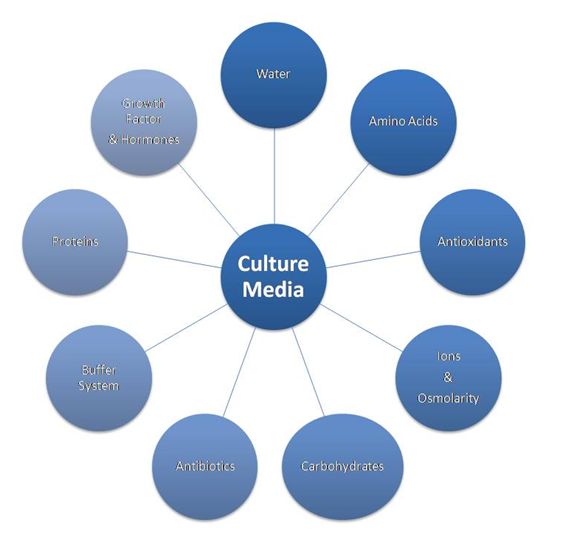
Assisted Reproductive Technology results have been improved due to the improvement in culture media conditions. There are number of commercially available culture media in the market with components like protein, antioxidants, carbohydrates etc. In this blog, we are going to discuss the key components of media & how they support to embryo growth.

What is Culture Media?

Culture media is the artificial environment given to the embryos for growth & development. Culture media is based on two philosophies:

  • Back to nature Principle
  • Let embryo decide the principle

In nature principle, the media components try to imitate the components of a female reproductive system .Which means the media is formulated sequentially according to the embryo developmental need i.e. from zygote to a blastocyst. Whereas, Embryo chooses principle is single step or monoculture formulation in which the media is supplemented with all the macromolecules and then embryo utilize the macromolecules according to its requirements.

Key Components of Embryo Culture Media

Water
Most of the culture media are made up of 99% of water. As, the goodness of media depends upon the quality of water. So, the water sources should be good.

Ions

The role of ions in the media is to maintain the osmolarity. The ions present in culture media is Na, Cl, P, Ca, Mg, S, K, etc. Osmolarity of medium affects cell volume & embryo development. Elevated osmolarity can result into developmental arrest. Osmolalities of culture media should be in the range of 260 to 298 milliosmoles.

Carbohydrates

Carbohydrates are the key source of energy for embryo growth. The media consist of pyruvate, lactate and glucose. In the initial stage of development pre compacted embryo utilizes the pyruvate as primary source of energy .However, in post compaction stage the embryos use glucose for expansion.

Amino Acid

These are important regulators serve as energy sources. Essential & non essential amino acid stimulates the production of ICM of blastocyst. Whereas trophoectoderm formation & hatching in blastocyst is initiated by non-essential amino acids (Glutamine).

Antioxidants

Invitro embryos when exposed to culture conditions they may experience oxidative stress due to production of Reactive Oxygen Species (ROS) Which have a negative impact on the development of embryo. Media should be supplemented with antioxidants such as Lipoate to avoid stress on embryo produced by ROS.

Antibiotics

To avoid bacterial contamination in culture media antibiotics like gentamycin, streptomycin are added to media.

Proteins

 Protein is the common macromolecule in human embryo culture media such as Human Serum Albumin (HSA). It aids in embryo development. They also maintain membrane permeability & osmoregulation while manipulation of gamete in vitro.

Buffer System

The suggested pH range for culture media is 7.2 -7.4. Most of the culture media have bicarbonate buffer system to sustain the pH in the tolerable range. For handling gametes outside the incubator HEPES & MOPS are preferred.

Growth Factors & Hormones

Embryos are exposed to a blend of maternal hormones & the role of hormones in embryo development is uncertain. Growth factors have considerably role in growth & differentiation of Day4 Morula to a Day 5 Blastocyst. Even due to the addition of growth factors to the media have drastically improved the implantation rates.

Can Adenomyosis affect my fertility

Can Adenomyosis affect my fertility

Can Adenomyosis affect fertility

What is Adenomyosis?

Adenomyosis is a condition in which the cells of endometrium (the uterine lining) are present inside the muscular wall of uterus. There is also associated hypertrophy uterine muscles.

How Adenomyosis Impacts Fertility?

Adenomyosis can affect fertility in two ways. Firstly it effects the uterine contractions which helps sperms to reach the tubes. Secondly it also increases the number of toxic cells in the uterine lining which may effect the implantation of embryos.

Adenomyosis and Endometriosis: How They Impact Fertility

Adenomyosis may also be associated with endometriosis, a condition in which the uterine lining cells are present in the ovaries or other sites in pelvic. This may further effect the oocyte quality and number, further contributing to difficulty in conception.

If you want to learn more about this conditions or have any concerns, you can ask our fertility experts.

Fertility Preservation for Women Diagnosed with Cancer

Fertility Preservation for Women Diagnosed with Cancer

Fertility Preservation for Women

The most common question asked in IVF counsellings is “Doctor, as we have heard, we need to do complete bed rest after embryo transfer or I can move around. Do you think 15 days leave is sufficient.” So it’s time to give away this myth forever now.

Factors Affecting Implantation of Embryos

The implantation of embryos placed inside your uterus after embryo transfer depends upon three most important factors:

  • Quality of eggs
  • Quality of sperms
  • Receptivity of endometrium.

Debunking Myths for IVF Success

Moreover uterus is a collapsed cavity with opposins walls and a closed cervix. If the embryos are placed inside the uterus at their proper position then few minutes after embryo transfer they remain at their same stable position and in no ways they will fall down even if you stand after the embryo transfer.

Going by literature, various studies have been conducted in which pregnancy rates were compared between the groups who were made to get up 20 minutes after the embryo transfer and those made to rest for varying periods from 3 minutes to even 24 hours in some centers. But no difference was found in the pregnancy rate and the live birth rate. In certain systemic reviews and meta analysis it has been shown that complete bed rest might negatively affect the outcome of IVF/ICSI cycle and the cause may be stress and anxiety mechanism.

So a lot of evidence is against the bed rest factor. Even at Reviva we have seen pregnancy rate comparable between the bed rest and no bed rest groups. I can recall many positive results even in those patients who jump out of bed even half an hour after transfer and those joining their offices the very next day. But inspite of clinical evidence we daily come across patients who had undergone failed cycles at other centers or one of their relatives had undergone treatment elsewhere and were advised complete bed rest after transfer and to the extent that they were kept hospitalized for 24 hours.

All this increases the anxiety factor in the patient. Very obvious that lying on bed the whole day is not easy and the thought process is totally focused on one thing and more of stress and negative feelings. How do you think it’s going to help the success rate. And if unluckily the results negative than the female takes the whole burden on her. She thinks it didn’t work because she didn’t have sufficient rest.

Piece of Advice

So our advice to all our patients, don’t go on house arrest of 2 weeks. Take it easy and carry out with your normal activities. Rest is not going to influence your outcome. So relax, be normal and wait for nature to do its best.

ENDOMETRIOSIS WHAT’S THE URGENCY ?

ENDOMETRIOSIS WHAT’S THE URGENCY ?

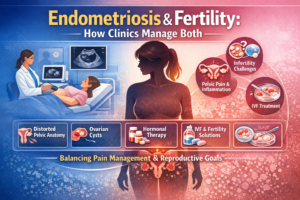
Endometriosis and Fertility

What is Endometriosis?

This is a clinical entity where the uterine lining cells are present outside the uterus, usually, ovaries. The incidence is in reproductive age group.

This condition effects your chances of conceiving by decreasing number and quality of eggs, causing pelvic adhesions and hence tubal blockage toxic microenvironment and also effects endometrium receptivity. (2-10 % in women in general population and 20-30% in infertile group)

Endometriosis and Fertility: Understanding the Impact

Women with endometriosis are 5% less likely to continue naturally even in cases of mild endometriosis. In severe endometriosis the fertility decrease is much higher.

Now since endometriosis is an on-going process, so when diagnosed we tell the patient to plan early. Even after surgical removal of endometriotic cyst, the non visible endometriotic spots continue to release toxins which can effect your fertility. And if patient doesn’t take any treatment after surgery and doesn’t conceive within six months, the pre-surgical state may come again. So postsurgery aggressive treatment is required in cases of grade 3-4 and those with grade 1 and 2 are advised to plan early either naturally or IUI.