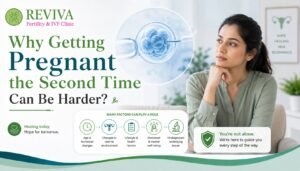
Why Getting Pregnant the Second Time Can Be Harder?

For many couples, having their first child creates a comforting belief that expanding the family later will happen just as naturally. But for many families, that is not always the case.

Trying for a second baby can sometimes become an unexpectedly emotional journey. Negative pregnancy tests, long waiting periods, and unanswered questions can bring stress, frustration, and confusion especially when conceiving the first child happened easily.

This condition is known as secondary infertility, and it affects more couples than many people realize. The good news is that it is often treatable. With proper diagnosis, medical guidance, and personalized care, many couples are able to successfully grow their families.

Clinics such as Reviva IVF help couples identify the root cause of fertility challenges and explore suitable treatment options.

What Is Secondary Infertility?

Secondary infertility refers to the inability to conceive or carry a pregnancy to term after previously giving birth to one or more children.

In simple terms, pregnancy happened before, but conceiving again has become difficult.

Doctors generally recommend consulting a fertility specialist if:

  • You are under 35 and have been trying for 12 months without success
  • You are 35 or older and have been trying for 6 months
  • You have experienced repeated miscarriages
  • You have irregular periods or known reproductive health concerns

Early medical guidance often improves diagnosis and treatment outcomes.

Why Is It Harder to Get Pregnant the Second Time?

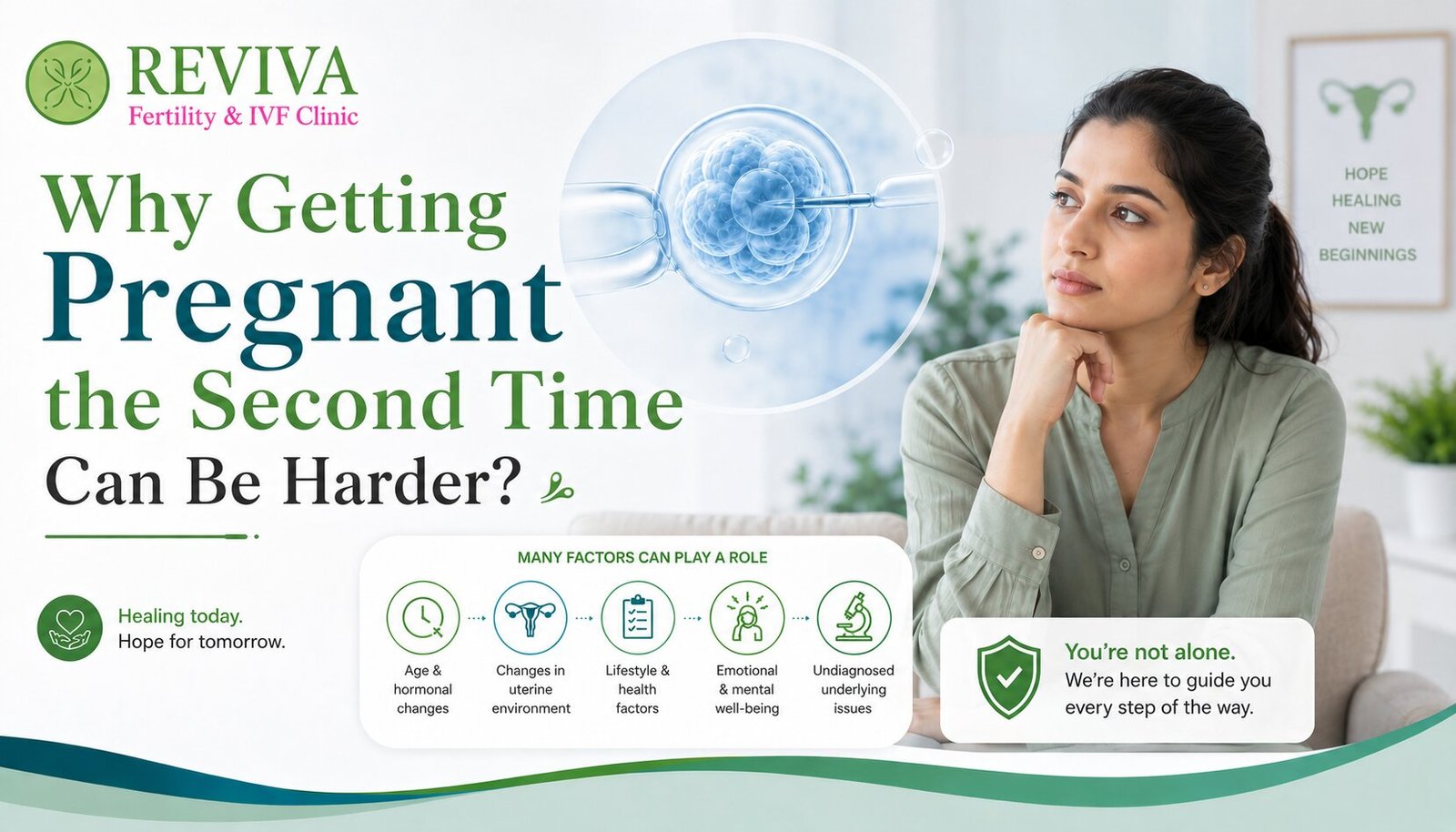
Secondary infertility rarely has a single cause. In many cases, multiple factors contribute together.

Age-Related Fertility Changes

Age is one of the most significant factors affecting fertility.

A woman’s egg reserve and egg quality naturally decline over time, particularly after age 35. Even a gap of a few years between pregnancies can influence conception.

Male fertility can also change with age. Sperm quality, motility, and overall reproductive health may decline gradually, affecting pregnancy chances.

Hormonal Imbalances

Hormones play a critical role in ovulation and reproductive health.

Conditions that may develop after the first pregnancy include:

  • Thyroid disorders
  • Polycystic Ovary Syndrome (PCOS)
  • Elevated prolactin levels
  • Premature ovarian insufficiency

These hormonal disruptions may interfere with regular ovulation and make conception more difficult.

Uterine or Fallopian Tube Issues

Physical changes in the reproductive system can also contribute to fertility challenges.

Previous pregnancies, surgeries, infections, or cesarean deliveries may lead to:

  • Scar tissue
  • Blocked fallopian tubes
  • Fibroids
  • Uterine polyps
  • Endometriosis

Such conditions may prevent fertilization or reduce successful implantation.

Male Fertility Factors

Infertility is not only related to female reproductive health.

Male factors contribute to a significant number of infertility cases. Changes in sperm count, sperm movement, lifestyle habits, stress, obesity, smoking, alcohol consumption, or medical conditions can all impact fertility.

That is why a fertility evaluation should always include both partners.

Lifestyle Habits

Daily lifestyle choices can quietly influence reproductive health.

Common factors include:

  • Poor nutrition
  • Lack of exercise
  • Being overweight or underweight
  • Smoking
  • Poor sleep
  • Chronic stress

Even small lifestyle improvements can positively affect fertility.

Signs You Should See a Fertility Specialist

Professional guidance may be helpful if you experience:

  • Irregular or absent periods
  • Severe menstrual pain
  • Recurrent miscarriages
  • Previous fertility treatment
  • Pelvic infections
  • Diagnosed PCOS or endometriosis
  • Difficulty conceiving despite consistent efforts

Seeking help early can often lead to faster answers and better treatment outcomes.

How Secondary Infertility Is Diagnosed

A fertility specialist typically recommends a complete evaluation for both partners.

Diagnostic testing may include:

  • Medical history review
  • Physical examination
  • Hormone testing
  • Ovulation tracking
  • Ultrasound scans
  • Fallopian tube testing (HSG)
  • Semen analysis

The goal is to identify the root cause and build an effective treatment plan.

Treatment Options for Secondary Infertility

Treatment depends on the underlying cause. Some couples conceive with simple lifestyle changes or medication, while others may benefit from advanced fertility procedures.

Fertility Medications

These medications help stimulate ovulation and improve the likelihood of conception.

Ovulation Monitoring

Tracking ovulation helps identify the most fertile window and improves timing for conception.

Intrauterine Insemination (IUI)

In IUI, specially prepared sperm is placed directly into the uterus around ovulation to improve fertilization chances.

In Vitro Fertilization (IVF)

IVF remains one of the most effective fertility treatments available today.

During IVF, eggs are collected, fertilized in a laboratory, and healthy embryos are transferred into the uterus.

Advanced centers such as Reviva IVF IVF Program provide personalized treatment plans and advanced reproductive technologies to improve success rates.

About Reviva IVF

Reviva IVF is a trusted fertility and reproductive care center dedicated to helping couples overcome infertility challenges through advanced medical treatments and compassionate support. The clinic offers a wide range of fertility services, including IVF, IUI, fertility assessments, ovulation management, and male infertility treatment.

With experienced fertility specialists and modern laboratory technology, Reviva IVF focuses on identifying the root cause of infertility and providing customized treatment plans tailored to each couple’s needs. Their patient-first approach combines advanced reproductive technology with emotional support, ensuring every patient feels informed and cared for throughout the fertility journey.

Secondary infertility may feel overwhelming, but with timely diagnosis and expert care, many couples successfully overcome fertility challenges and move closer to growing their family.

The Emotional Side of Secondary Infertility

Secondary infertility can be emotionally exhausting.

Many couples experience feelings of guilt, anxiety, frustration, and isolation. Social pressure can make the situation even more difficult, especially when people assume that having one child means there should be no fertility concerns.

Comments from family or society can unintentionally deepen emotional stress.

Wanting another child is deeply personal, and struggling with that dream can be painful.

Emotional support is just as important as medical care. Open conversations with your partner, counseling, and support groups can help make the journey easier.

Why Choose Reviva IVF?

Choosing the right fertility clinic can significantly influence both experience and outcomes.

At Reviva IVF,couples receive:

  • Personalized fertility evaluations
  • Experienced fertility specialists
  • Advanced IVF and fertility treatments
  • Transparent treatment planning
  • Modern laboratory support
  • Compassionate care throughout the journey

The focus is not just on treatment but on understanding every couple’s unique story and guiding them with personalized support.


Can You Get Pregnant During Menopause? Understanding the Possibilities

Can You Get Pregnant During Menopause? Understanding the Possibilities

Introduction

Menopause marks the end of a woman’s reproductive years, typically occurring between 45-55 years of age. However, many women wonder: Can you still get pregnant during menopause? While natural conception is rare after menopause, there are exceptions and assisted reproductive options available.

Understanding Menopause and Fertility

Menopause occurs in three stages:

  1. Perimenopause: The transition phase before menopause, lasting several years. Ovulation becomes irregular, but pregnancy is still possible.
  2. Menopause: Officially diagnosed after 12 consecutive months without a menstrual period. Natural pregnancy is extremely unlikely.
  3. Postmenopause: The years after menopause, where hormone levels remain consistently low, eliminating natural fertility.

Can You Conceive Naturally During Perimenopause?

Yes, though it’s uncommon. Women in their late 40s may still release eggs, and if unprotected intercourse occurs, pregnancy can happen. However, fertility significantly declines due to:

  • Reduced egg quality.
  • Irregular ovulation.
  • Increased risk of miscarriage and genetic abnormalities.

How Assisted Reproductive Technology (ART) Helps

For women who have reached menopause but wish to conceive, fertility treatments can help:

  1. Egg Donation – Using a younger donor’s eggs increases the chances of a healthy pregnancy.
  2. Hormone Therapy (HRT) – Helps prepare the uterus for embryo implantation.
  3. IVF (In Vitro Fertilization) – The most effective way for postmenopausal women to achieve pregnancy, often using donor eggs.

Risks of Pregnancy After Menopause

  • Higher Risk of Complications – Gestational diabetes, high blood pressure, and preterm labor are common.
  • Cesarean Delivery (C-section) – Most postmenopausal pregnancies require a C-section.
  • Increased Genetic Risks – Older eggs have a higher chance of chromosomal abnormalities, increasing conditions like Down syndrome.

Conclusion

While natural pregnancy after menopause is nearly impossible, medical advancements in ART make it possible for women to conceive later in life. If you are considering pregnancy at an advanced age, consult a fertility specialist to explore the best options for you.

DNA Fragmentation Test of Sperm: How Far it’s Helpful!

Sperm DNA Fragmentation Test
In this blog, we will take a close look at the DNA fragmentation test of sperm and how helpful it is in determining male fertility.

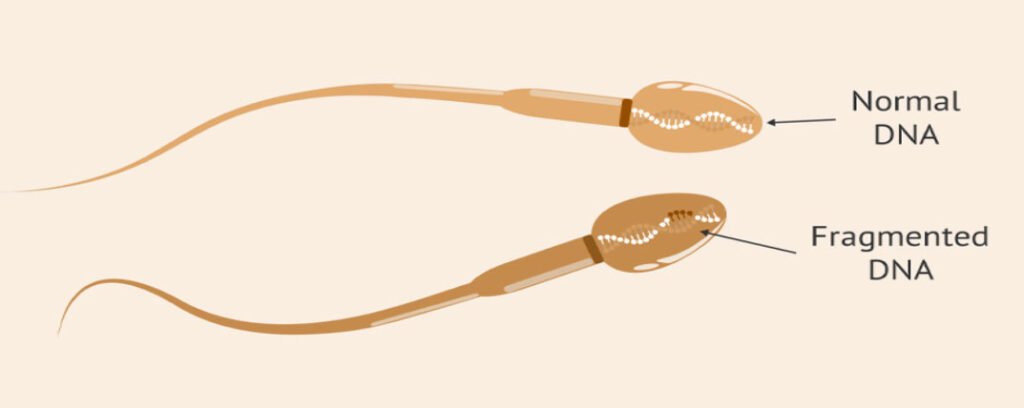
(Sperm DNA fragmentation test refers to the assessment of the level of damage to the genetic material in man’s sperm.)

  • The test is performed to identify the presence of DNA damage in the sperm which can contribute to male fertility problems.
  • The DNA fragmentation test can be done to assess the potential occurrence of male fertility and infertility. The fertilizing capacity of sperm to be able to help couples to understand the problems related to it.
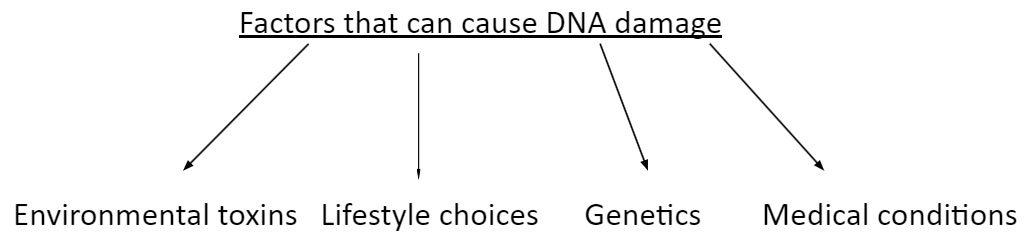
DNA Damage Factors

Can male fertility be improved if DNA fragmentation is detected?

Normal DNA

Conclusion:

It is important to note that high levels of DNA fragmentation have been linked to reduced sperm count & motility. It also decreases successful pregnancies. Consult with a healthcare professional specializing in male fertility to determine the best course of action if DNA fragmentation is high during DFI testing.

Bleeding & Spotting During Ovulation: When to be Concerned

Bleeding During Ovulation

Ovulation occurs when the ovary releases an egg and some women experience bleeding & spotting around the time they are ovulating, which is a normal occurrence. It’s fairly common for women to spot or bleed at some point in their menstrual cycles. But when should you be concerned about the bleeding during ovulation?

( This blog post will explore the signs that indicate when ovulation spotting or bleeding is normal and when it is a sign of concern. it will also discuss the next steps that you can take if you are concerned about bleeding & spotting during ovulation.)

What is Ovulation Spotting?

Light vaginal bleeding can occur before or after ovulation. (Not every woman has spotting during ovulation). Ovulation bleeding occurs when hormone levels change. For example, estrogen levels decrease before a woman starts ovulating, causing the endometrial to shed.

You May Also Experience Other Symptoms of Ovulation Such as:-

When does ovulation bleeding occur?

When you are ovulating, an ovary releases an egg. This occurs in the middle of your menstrual cycle between 11 and 12 days after the first day of your last period. Women do not always ovulate on the same days, as it depends on the length of their cycle.

When is Spotting During Ovulation Considered Normal?​

Some signs that can help you determine whether your bleeding during ovulation is normal or a cause for concern.
  • First of all, it’s essential to keep in mind that ovulation bleeding occurs only once during each cycle.
  • Before you start ovulating, you experience an increase in estrogen levels, which then drop after ovulation. As a result progesterone levels rise for 5 days.
  • The fluctuation in E2 & P4 is what causes ovulation spotting.

When Bleeding During Ovulation is a Sign of Concern?

For heavy, severe and prolonged bleeding, we recommend seeing a doctor to provide you with a diagnosis.

Some Health Conditions Can Cause Bleeding Between Periods:​

Spotting between periods can also be a sign of infection. If you have a sexually transmitted infection (STI) such as gonorrhoea and Chlamydia, you have a high chance of having light bleeding.

Book A hassle free IVF Consultation with Reviva fertility & IVF Clinic!

Give Us a Call

Fresh VS Frozen Embryo Transfers: An Explanation through Comparisons

Fresh VS Frozen Embryo Transfers: An Explanation through Comparisons

Doctors initially introduced In Vitro Fertilization (IVF) with fresh embryo transfers as the only option due to the limited progress in cryopreservation techniques.

Fresh & Frozen Embryo Transfers

However, over the past years, significant advancements in:

Nowadays Generally FET’s are preferred depending upon various factors:-

  • Age of couple
  • No. of oocytes received
  • Quality of embryos
  • Hormonal parameters
  • Adequacy of endometrial lining

Fresh & Frozen Embryo Transfers

Understanding the Differences

Fresh Embryo Transfer

Frozen Embryo Transfer

Embryo Transfer

The Benefits & Drawbacks of Fresh & Frozen Embryo Transfer

Advantages of Fresh Embryo Transfers

  • The waiting time for fresh embryo transfer is shorter as embryos are transferred soon after fertilization.
  • The process avoids subjecting the embryos to the stress of freezing and thawing.
  • The fresh cycle involves the process of ovarian stimulation, which can result in a receptive endometrial lining if the woman does not experience hyper-response.
Disadvantages of Fresh Embryo Transfer
  • Ovarian stimulation during fresh cycles may result in OHSS (ovarian hyperstimulation syndrome), a potentially serious condition marked by enlarged & painful ovaries.
  • Fresh transfer is time-critical & needs to be synchronized with the natural menstrual cycle, providing limited flexibility in terms of timing.
Advantages of Frozen Embryo Transfers
  • FET provides a couple who have encountered challenging situations like cancer treatments with the opportunity to have children once they complete their treatments.
  • Reduced risk of ovarian hyperstimulation.
Disadvantages of Frozen Embryo Transfer
  • Not every embryo can withstand the freezing and thawing process, which could reduce the number of embryos that can be transferred.
  • Going through frozen embryo transfer can be quite time-consuming.

Factors to Consider When Deciding Between Fresh or Frozen Embryo Transfer

  • Personal health
  • Timing flexibility
  • Success rate

NOTE: REVIVA IVF & Fertility Clinic in Chandigarh provides advanced fertility preservation methods. Our dedicated healthcare team serves exceptional care with precision & expertise in reproductive healthcare. For specialized assistance with embryo transfer, reach out REVIVA IVF & Fertility Clinic

For more information contact us at: 9915004407

How To Select Your IVF Clinic in Chandigarh

How To Select Your IVF Clinic in Chandigarh

Reviva IVF Clinic

IVF is an extensive procedure that may involve frequent visits to the clinic, regular talks with your doctor, and the need for constant support. This is why it is important to choose an IVF centre in Chandigarh that gives you the required attention and treats you well.

But how do you find a good IVF clinic? What are the factors that you must consider? Our article today is all about it.

We will help you distinguish clinics based on multiple parameters including emotional support, care, and compassion, which are paramount in sensitive procedures like IVF.

Reach out to friends and family for referrals

We are strong advocates of referrals because personal experience is the most reliable form of feedback. If anyone you know has sought IVF treatment, reach out to them and ask them about the doctor/clinic. You can also ask the clinics you are interested in for referrals. Reputed clinics are usually happy to share the details.

While speaking to them, ask about the entire journey and their overall experience. This will help you learn if a clinic needs to be avoided completely.

Speak to the doctor directly

A hearty conversation with the doctor will tell you a lot about what you can expect. It is crucial to create a healthy relationship with the doctor who will treat you because he/she will be your support system for a long while.

Be open about your concern and see how the doctor responds. If he/she only seems interested in speaking about the treatment, it is a red flag. Genuine, compassionate doctors are willing to help you, answer your questions, and walk the path with you. These are the doctors you should seek.

Another very important factor here is the doctor’s time. Since IVF is not a one-session procedure, you have to be sure that the doctor has time for you, regardless of how many other patients he treats. This will be clear once you get in touch a couple of times and see how long you have to wait. After the first visit, even if you like the doctor thus, do not take hasty decisions or make the advance payment.

Will the treatment be customized?

In case the first cycle does not work, the doctor should ideally tweak the treatment for the next. Reputed doctors follow this approach because everyone’s condition is unique and the same template treatment may not work for everyone.

If your case is unique, do they have the required expertise?

Almost all clinics are well-equipped to deal with regular IVF procedures. But, if you have a difficult condition, this particular factor will be important for you. Even if the clinic/doctor has been in business for years, the experience will not count if they haven’t dealt with cases similar to yours. So, make sure you get that information from them as well.

How good is the clinic?

Since, along with the doctor, you will also be dealing with staff members, you should assess how good the clinic is. Here are a few things to ask yourself:

  • Is the staff courteous and kind?
  • Are all hygiene practices being followed?
  • Is the clinic a super-specialty clinic or multi-specialty clinic? Especially in these uncertain times, it is best to choose a super-specialty clinic. The doctors and staff members will be dedicated to IVF and not be distracted by other emergencies.
  • Do they have the latest equipment to cater to your condition? A little background research and a talk with your OB/GYN will help you understand this.

Are they being honest?

Pushy clinics are bad news. They will be too eager to push their services instead of honestly assessing your condition and helping you accordingly.

In case you need donor eggs, they may also push you to choose what they offer instead of letting you use your own eggs.

Such situations can be tricky but you can understand whether a clinic is trustworthy by the way they approach you, speak to you, and suggest a way forward. Good clinics will not be pushy or complacent. The doctor will not just advise but also give you reasons behind the recommendation.

IVF is an emotionally tiring process. Having an understanding doctor who supports you through the difficult journey will make it considerably easy. So, choose wisely.

Reviva IVF – Your friendly IVF clinic in Chandigarh

At Reviva IVF, we value our transparency over everything else. We strive to provide a customized treatment that is best suited to you and your health conditions. Our team of dedicated doctors will work closely with you right from day one to help your dream of being a parent come true. Get in touch with us and choose the best IVF centre in Chandigarh!

Getting pregnant after 40 and the treatment options

Getting pregnant after 40 and the treatment options

Pregnancy After 40
The reproductive potential of a woman declines after 40. So, chances of natural conception reduce with age. Delaying in pregnancy can be due medical reasons or lifestyle which can be a leading cause of ovarian aging. Women are born with millions of eggs but with age, the quality & number of eggs become less. But if natural conception is not happening due to age factor then a patient must go for a fertility checkup.

How pregnancy can be achieved in 40’s?

Achieving pregnancy after 40’s needs a healthy lifestyle. Taking good care of health, eating a healthy diet, and regular exercise can improve the chance of your pregnancy. Since the age is the major factor so if a woman has aged more than 40 yrs & trying for a baby without any success then the patient should seek the advice of a fertility doctor. The infertility factor can either be associated with male or female. So it is important to know the cause. In women, the problem can be blocked fallopian tubes, endometriosis, infections, fibroids etc. In males, the problems can be with semen sample like, Azoospermia, oligospermia, Globozoospermia etc. IVF treatment for such patients is the only answer to achieve a successful pregnancy. If a couple is undergoing IVF treatment patient must undergo necessary investigations to make a correct diagnosis. In women, blood investigation is performed to check the hormonal levels – Estrogen, progesterone, LH levels, AMH level (check ovarian reserve), followed by Ultrasound to monitor any fibroid or lesions etc. Whereas, in male blood tests for viral markers, semen analysis & culture is done.

Treatment available after 40

Assisted Reproductive Technology (ART) process which is commonly known as Invitro Fertilization (IVF) is the treatment available for such patients. Through IVF treatment, it is to ensure that a patient is able to get children after taking proper treatment. In the process, the embryo is made outside the human body in in-vitro conditions and on Day 3 or Day 5 it is transferred to the uterus for further development. The whole treatment can be done in 2 weeks.Name of some treatment Available:
  • IUI (Intrauterine Insemination)
  • IVF (Invitro-Fertilization)
  • ICSI (Intracytoplasmic Sperm Injection)
  • LAH (Laser Assisted Hatching)
Reviva Fertility clinic & IVF Centre in Chandigarh offers you all kind of latest fertility techniques to treat infertility problem.

Egg freezing Process

Egg freezing Process

Egg freezing Process

Egg freezing is the process of freezing mature or immature oocytes below sub-zero temperatures. These oocytes can be thawed & matured under in vitro conditions & can be fertilized using appropriate techniques. Good pregnancy rates have been seen from such embryos derived from oocyte freezing. In view of the fact that the egg freezing has drawn a lot of attention in the field of reproductive medicine, the indications for oocyte freezing are given below.

  • Women of reproductive age undergoing chemotherapy for cancer treatment.
  • Unable to get sperm for IVF/ICSI during treatment
  • Egg donation programme
  • When women wish to have family in the later stage due to their personal reasons.
  • History of premature ovarian failure (POF)
  • In PCOS patients when stimulation is merged with in vitro maturation (IVM) method.

Process of freezing

After egg retrieval, the embryologist (an expert in oocyte freezing) will wash & incubate the oocytes for approx 2 hrs. The process starts with denudation in which the cumulus cells which surround the oocytes are denuded to know the maturity of eggs. During the freezing process, the oocyte has to undergo various biological changes. Firstly, it is treated with Equilibration Solution (ES) – high concentration of penetrating cryoprotectants like glycerol DMSO, propanediol, etc which replace the water content of cell with cryoprotectants. Then the oocytes are treated with Vitrification solution (VS) which is a combination of permeating & non-permeating agents (Rafflose, Trehalose, etc). Then it is directly exposed to liquid nitrogen. Due to this highly viscous medium its forms a glassy substance at low temperature. The procedure is very rapid any delay can cause damage to the oocytes like spindle damage etc.

Advantages of Oocyte freezing:

  • Social egg freezing offered to women under the age of 38 yrs who want to start their family at later stages. It adds a possibility to have a healthy & genetically related child.
  • Fertility preservation for young women with cancer.
  • Reduces need of a donor
  • Reduces the number of treatment performed at advanced maternal ages.

A couple needs to understand the impact of age on their fertility. Egg freezing is an alternate option for those people who are facing such kind of problems as discussed in the above article.

For more information, you can reach us for more information.

Ovarian Rejuvenation

Ovarian Rejuvenation

Ovarian Rejuvenation
Revolution in the medical sciences provides a chance to women to revitalize their ovaries by a therapy called ovarian rejuvenation. The therapy offers hope to those patients who have problems like low Oocyte reserve, premature ovarian failure, early menopause problems, and Anti-Mullerian hormone levels.

It is a fact that, a woman is born with millions of Oocyte in her ovaries and as she grows up the egg supply declines in number and in quality as well. It seems quite impossible to develop new eggs in the ovaries naturally. But, according to the recent researches, it is possible to regenerate new eggs with the help of patient’s blood cells. Blood cells have growth factors which help to heal various types of injuries in the body. Growth factors can stimulate the growth of new blood vessels, nerve and connective tissues by the activation of Stem Cells.  And stem cells have a power of regeneration.

Ovarian Rejuvenation Procedure

Ovarian rejuvenation can be done on anytime on women with or without menstruation cycle. The procedure has two steps:

Step 1:

The First step is to isolate the PRP (Platelet-rich plasma), Preparation of PRP begins with the insertion of a needle into the vein in order to get blood in the test tubes. Platelets and White blood cells (WBCs) are separated from the red blood cells (RBCs) and serum by centrifugation process which takes approximately one hour to prepare PRP.

Step 2:

The Second step is Administration of PRP into Ovaries, under an intravenously administered anaesthesia. The isolated PRP (supplied with protein-rich growth factor and stem cell chemoattractants) is injected into the ovaries specifically in the cortical tissue of the patient with the help of transvaginal ultrasound.

Ovarian Rejuvenation has the utmost benefit that it gives a chance to women to become pregnant from her own eggs naturally and also helps in improvement in hormone levels.

After Procedure Precautions

After the procedure, it is very important to keep an eye on AMH (anti-Mullerian hormone), FSH, LH and Estradiol levels along with the ovarian function for 1- 3 months. The values will help to know the positive working of ovarian rejuvenation. Usually, the improvement shows up in 1-3 months but in some cases, it takes more than that. So, the monitoring is done up to 6 months. But the treatment is still in research phase. If ovarian rejuvenation treatment shows a promising future, and then it could help many women who have various types of age-related infertility problems.

Preparing for Donor Eggs IVF Cycle – Psychological Issues

Preparing for Donor Eggs IVF Cycle – Psychological Issues

Preparing for Donor Eggs

In about 50% of our patients, being taken for IVF, the oocyte quality or quantity is the major concern. It’s very easy for us to show you the path of egg donation as it is a routine for us. But we know it is not that simple for you. Though it carries a very high success rate, but psychological implications on the recipient are very high.

The major indications for IVF with donor oocytes in Reviva are –

  • Premature ovarian failure
  • Menopause
  • Decreased ovarian reserve
  • Endometriosis
  • Recurrent self cycle failures with no proven endometrial or male factor.
  • Genetic causes.

It takes time for the couple to accept the option of Donor eggs, but usually the desire of having a family overcomes this hesitation.

The most important concern of the couple is the quality of genes transmitted to the child. Though the anonymous egg donor is being matched to the recipient as far as possible, the concern always remains in majority of recipient; they are satisfied with their gestational contribution which creates a strong bond.

Another way of dealing with it is to keep the information of type of cycle between the couple only, it will serve you from interrogation eyes and any future problems will be avoided.

On positive note egg donation is associated with many benefit. The most important since eggs are derived from a young woman, they are more likely to produce chromosomally normal embryos and so risk of abortions and birth defects is less.

So, though egg donation is not the first choice of anyone, but it is treatment with very high success rate where it is indicated.